
Mercury
Mercury is the smallest planet and the closest to the Sun. Airless and heavily cratered, it swings through extreme temperatures and has the most eccentric orbit of the eight planets.
Key facts
Science
Physical
- Mass
- 3.30 × 10²³ kg · 0.0553 M⊕
- Radius
- 2,440 km · 38% of Earth's radius
- Density
- 5,427 kg/m³ · 5.4× water
- Computed from mass and radius
- Surface gravity
- 3.7 m/s² · 38% of Earth's gravity
- Computed from mass and radius
- Escape velocity
- 4.25 km/s · 38% of Earth's escape velocity
- Computed from mass and radius
- Axial tilt
- 0.03 °
Orbital
- Distance from the Sun
- 0.403 AU
- Computed from the position at the selected time
- Semi-major axis
- 0.387 AU
- Computed from the cached state vector
- Eccentricity
- 0.2056
- Computed from the cached state vector
- Inclination
- 28.55 °
- Computed from the cached state vector
- Orbital period
- 88.0 days
- Computed from the cached state vector
- Perihelion
- 0.307 AU
- Computed from the orbital elements
- Aphelion
- 0.467 AU
- Computed from the orbital elements
- Mean orbital velocity
- 47.9 km/s
- Computed from the orbital elements
Rotation
- Rotation period
- 58.6 days
Atmosphere
- Composition
- Tenuous exosphere (O, Na, H, He, K)
- Surface pressure
- 1.0 × 10⁻¹⁰ Pa
Temperature
- Minimum
- 100 K (-173 °C)
- Mean
- 440 K (167 °C)
- Maximum
- 700 K (427 °C)
Composition
- Bulk composition
- Large iron core (~85% of the radius), thin silicate mantle and crust
Radiation & temperature
- Insolation
- 6.67 S⊕ · 6.67× the sunlight Earth receives
- Computed from the distance to the Sun (inverse-square; Earth's sunlight = 1), before any atmosphere.
- Bond albedo
- 0.09 · reflects 9% of incoming sunlight
- Equilibrium temperature
- 437 K (164 °C)
- Computed from albedo + distance from the Sun (airless black body)
- Measured mean temperature
- 440 K (167 °C)
- Surface magnetic field
- 300 nT · 1% of Earth's magnetic field
Discovery & history
- First known
- Known since antiquity
- Name
- The Roman messenger god, for its swift motion across the sky.
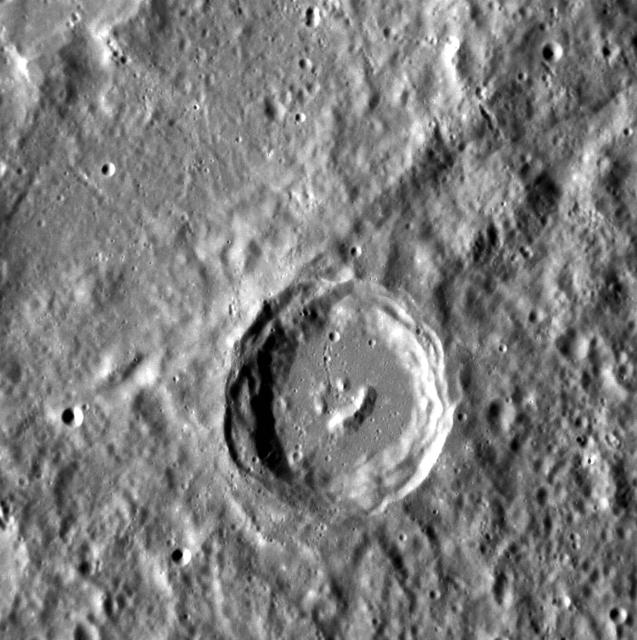
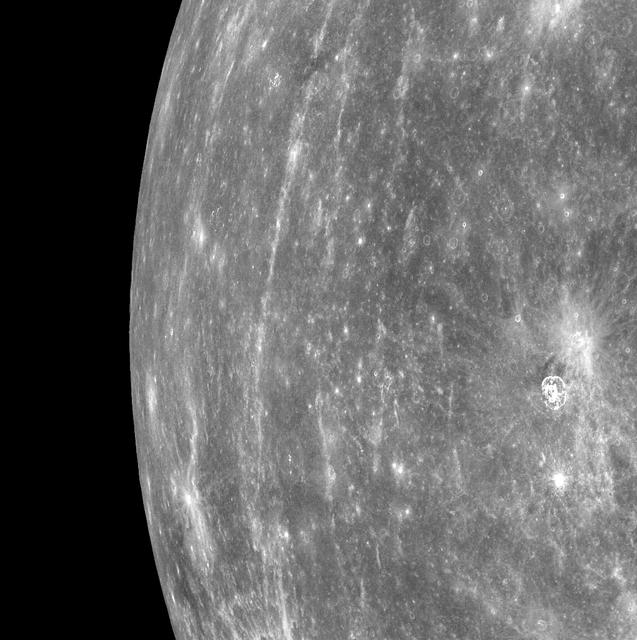
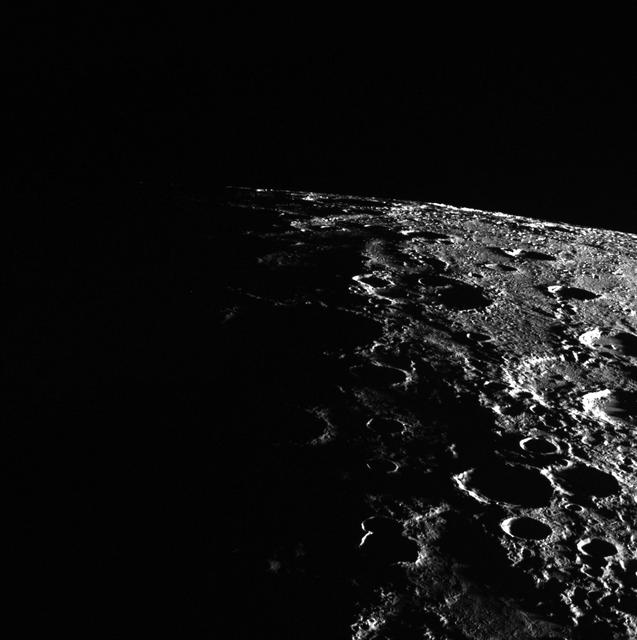
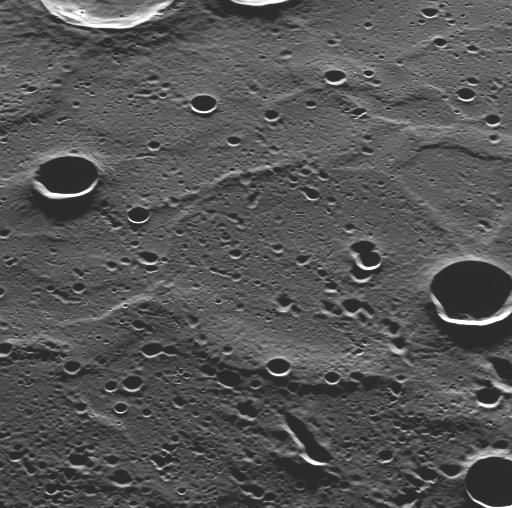
Mercury has been known since at least Sumerian times, recorded over 3,000 years ago. Because it never strays far from the Sun it is hard to see, and ancient Greeks at first thought the morning and evening apparitions were two different objects. It was named for the fleet-footed messenger of the gods. Its true nature — a cratered, airless world — was revealed only by Mariner 10 in 1974–75 and mapped fully by MESSENGER after 2011.
First spacecraft to visit Mercury; three flybys in 1974–75 revealed a cratered world with a magnetic field.
Images

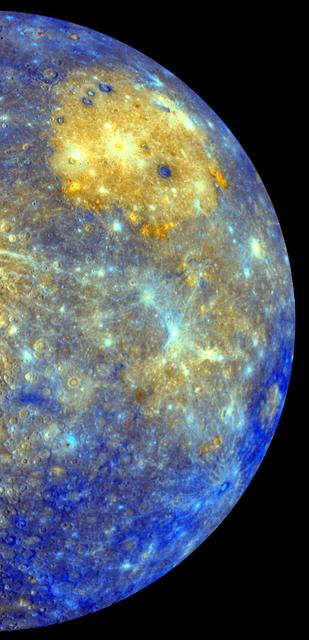
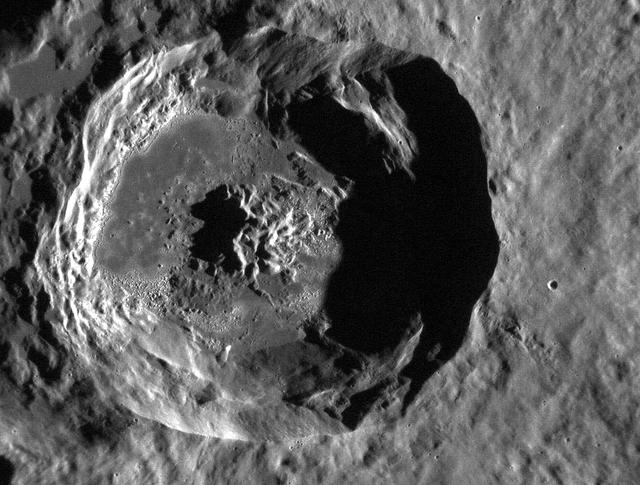
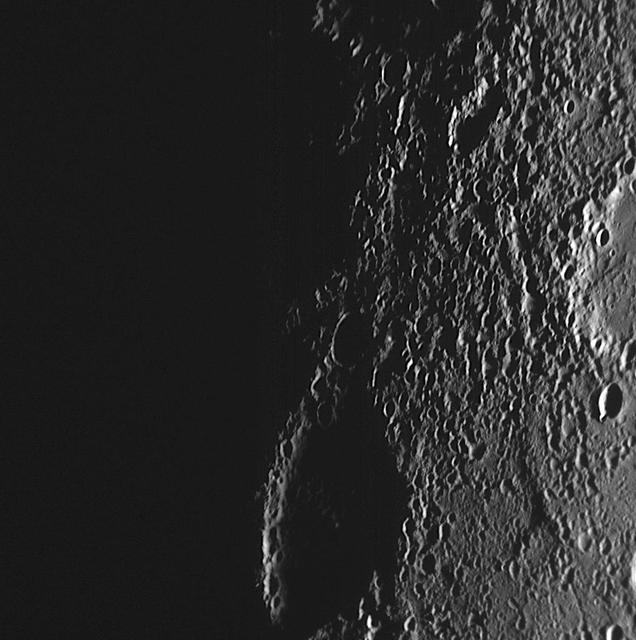
Images from open archives · credit shown per image