
Moon
The Moon is Earth's only natural satellite and the fifth-largest moon in the Solar System. Tidally locked to Earth, its cratered, airless surface drives our tides and stabilises Earth's axial tilt.
Key facts
Science
Physical
- Mass
- 7.34 × 10²² kg · 0.0123 M⊕
- Radius
- 1,737 km · 27% of Earth's radius
- JPL SSD Planetary Satellite Physical Parameters (mean radius)
- Density
- 3,342 kg/m³ · 3.3× water
- Computed from mass and radius
- Surface gravity
- 1.62 m/s² · 17% of Earth's gravity
- Computed from mass and radius
- Escape velocity
- 2.38 km/s · 21% of Earth's escape velocity
- Computed from mass and radius
- Axial tilt
- 6.68 °
Orbit around Earth
- Distance from Earth
- 384,400 km
- From JPL orbital elements
- Orbital period
- 27.3 days
- From JPL orbital elements
- Eccentricity
- 0.0554
- From JPL orbital elements
- Inclination to the ecliptic
- 5.16 °
- From JPL orbital elements
Rotation
- Rotation period
- 27.3 days
- Tidal locking
- Tidally locked to its parent
Temperature
- Minimum
- 100 K (-173 °C)
- Mean
- 250 K (-23 °C)
- Maximum
- 390 K (117 °C)
Composition
- Bulk composition
- Anorthosite highlands and basaltic maria; small iron core
Radiation & temperature
- Insolation
- 1.01 S⊕ · ≈ the sunlight Earth receives
- Computed from the distance to the Sun (inverse-square; Earth's sunlight = 1), before any atmosphere.
- Bond albedo
- 0.11 · reflects 11% of incoming sunlight
- Equilibrium temperature
- 271 K (-2 °C)
- Computed from albedo + distance from the Sun (airless black body)
- Measured mean temperature
- 250 K (-23 °C)
Discovery & history
- First known
- Known since antiquity
- Name
- Old English 'mōna'; Latin 'Luna'. Its name predates written history.
The Moon has guided calendars, tides and myth for all of human history. Galileo's 1609–10 telescope sketches revealed mountains and craters, ending the idea of a perfect celestial sphere. It remains the only world beyond Earth that humans have visited: twelve astronauts walked its surface during the Apollo programme (1969–72), and robotic missions continue to study and sample it.
The first spacecraft to pass the Moon, at 5,995 km — it found no detectable lunar magnetic field and went on into orbit around the Sun.
First US spacecraft to fly past the Moon (at ~60,000 km) and escape into solar orbit — though it passed too far to trigger its lunar sensor.
First human-made object to reach another celestial body.
First photographs of the Moon's far side — 29 frames developed on board and radioed home, revealing about 70% of the hemisphere never seen from Earth.
First US spacecraft to reach the Moon — but a dead craft: an onboard failure had left it silent, and it crashed on the far side returning no data.
Returned the first US close-up photographs of the Moon — over 4,300 images, a thousand times sharper than any from Earth — in the minutes before impacting Mare Cognitum.
Its final images were broadcast live on national television — 'Live from the Moon' — as it plunged into the crater Alphonsus.
Photographed the part of the far side Luna 3 had not seen: 25 pictures in 68 minutes.
First soft landing on the Moon; returned the first photographs from the surface.
The first spacecraft to orbit the Moon — 460 orbits measuring its weak magnetic field, uneven gravity and basalt-like surface.
First US lunar soft landing; proved the surface was firm and returned over 11,000 images.
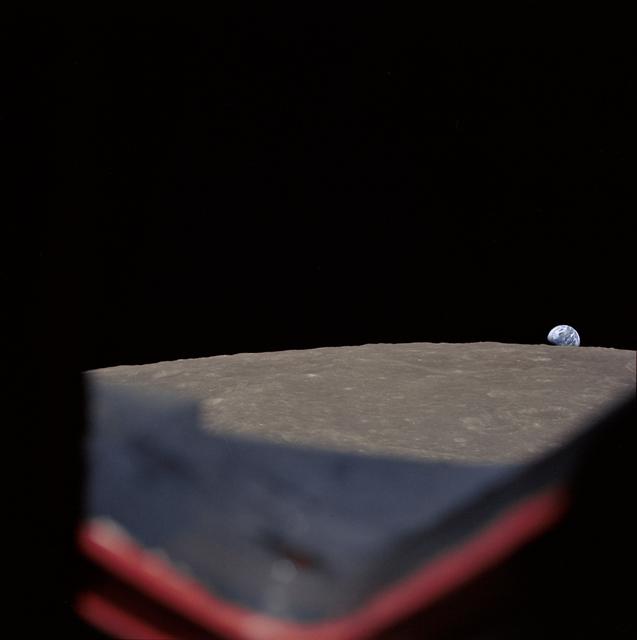
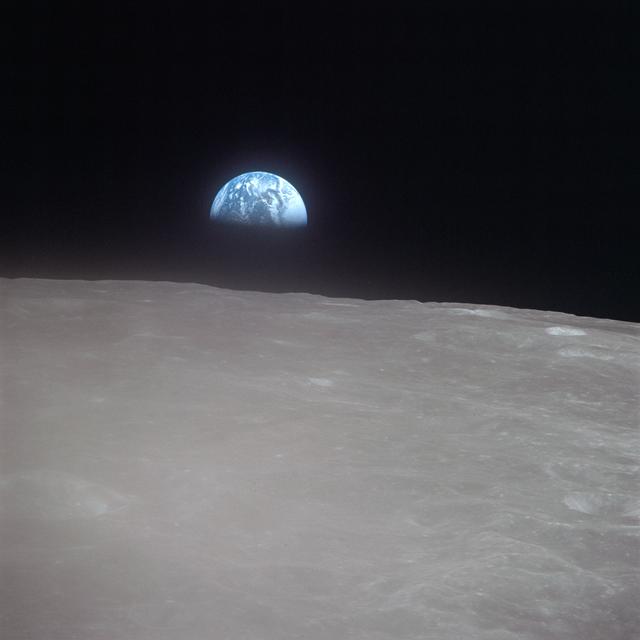
First of five orbiters that photographed ~99% of the Moon to choose the Apollo landing sites; it also took the first photograph of Earth from the Moon's vicinity.
The third soft landing on the Moon — it pushed a penetrometer into the regolith and measured its density and temperature.
Soft-landed in the Ocean of Storms and dug the first trenches in lunar soil; the Apollo 12 crew later walked to it and carried parts home.
In lunar orbit for six years; it found the Moon has no magnetic field of its own and leaves a cavity in the solar wind.
Made the first in-situ chemical analysis of the surface of another world, showing the Moon's soil was basaltic.
After landing in Sinus Medii it briefly re-fired its engines and hopped a few metres — the first controlled liftoff from the surface of another world.
The first spacecraft to fly around the Moon and return to Earth, with two tortoises that survived.
Flew around the Moon and photographed it, then crashed on landing when its parachute was released too high.
First crewed flight to leave Earth orbit and circle the Moon — ten orbits on Christmas Eve 1968.
Full dress rehearsal for the landing — Stafford and Cernan flew the Lunar Module 'Snoopy' to within 15 km of the surface while Young held orbit in 'Charlie Brown'.
Michael Collins flew the Command Module Columbia in lunar orbit while Eagle descended to the surface.
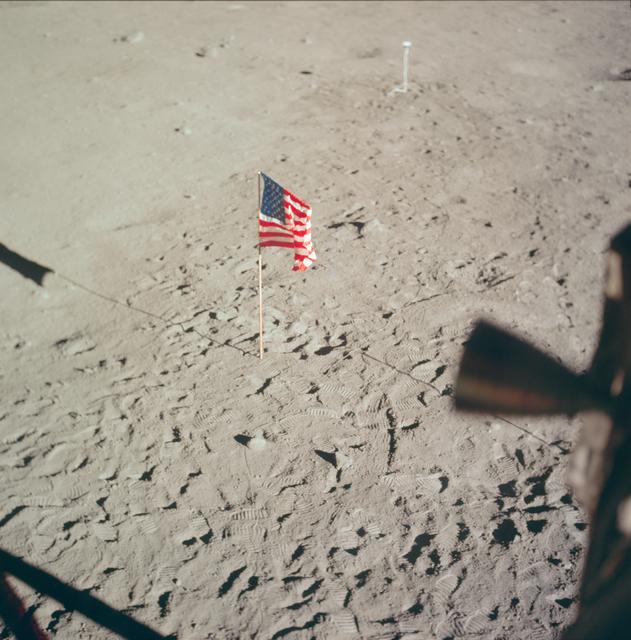
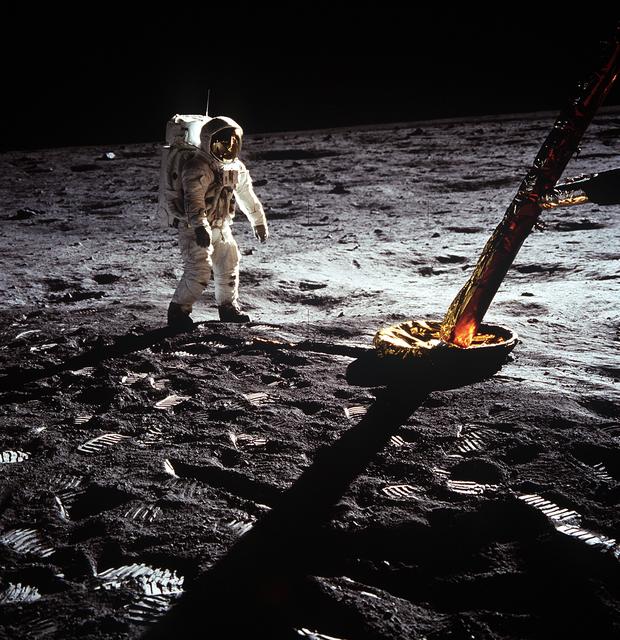
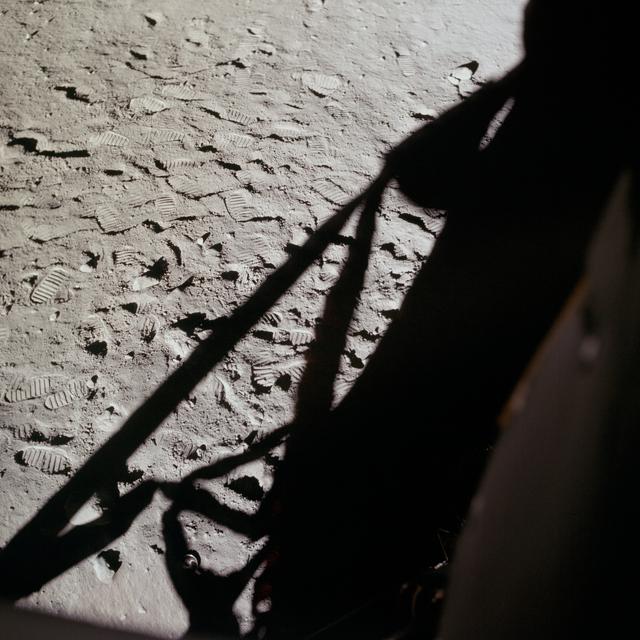
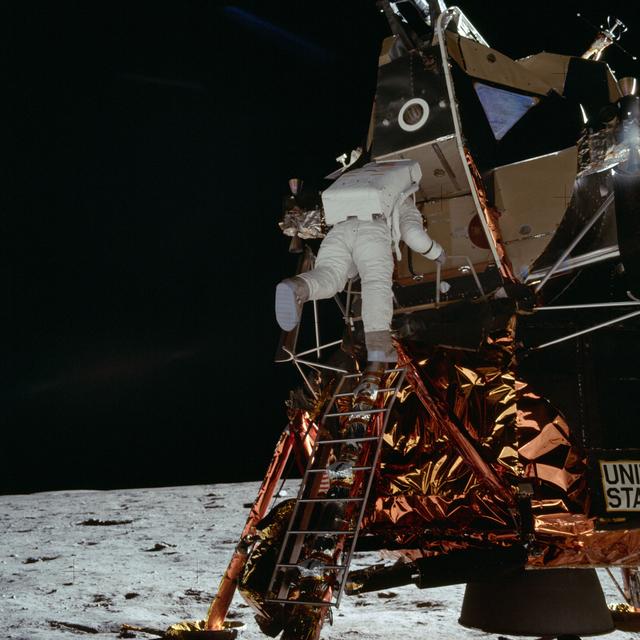
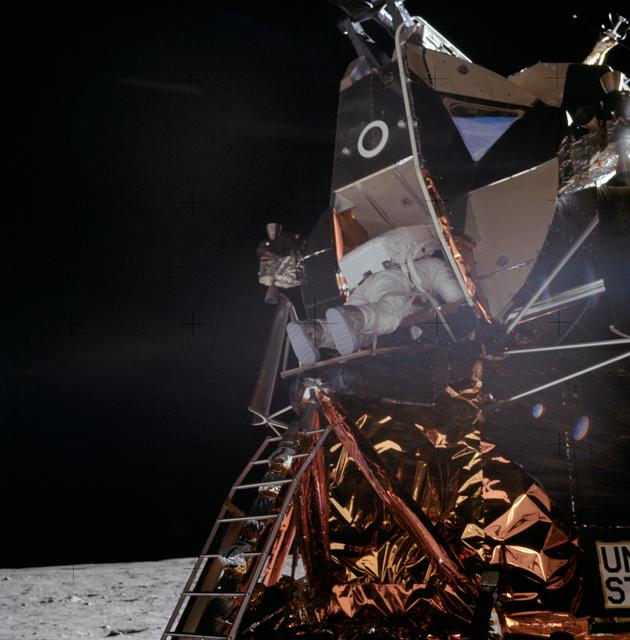
First crewed landing — Armstrong and Aldrin walked at Tranquility Base and returned 21.5 kg of samples.
The first fully successful Soviet flight around the Moon and back; 1,200 km (Beyond Earth) or 1,985 km (NSSDCA) away.
Second crewed landing — Conrad and Bean set down in the Ocean of Storms within 200 m of Surveyor 3, deployed the first ALSEP science station and brought back parts of the old probe.
The aborted landing — after an oxygen tank exploded, Lovell, Swigert and Haise looped around the far side at 254 km and reached 400,171 km from Earth, the farthest humans had travelled until Artemis II in 2026.
First robotic sample return from the Moon — 101 g of soil from Mare Fecunditatis.
The last Soviet flight around the Moon, splashing down in the Indian Ocean three days later.
First roving robot on another world; driven from Earth across ~10 km of Mare Imbrium over ten months.
Shepard and Mitchell landed at Fra Mauro, the site Apollo 13 had been forced to abandon, and returned 42 kg of samples, including ejecta from the Imbrium impact.
First of the extended 'J' missions — Scott and Irwin drove the first Lunar Roving Vehicle at Hadley Rille and found the 'Genesis Rock', anorthosite from the Moon's primordial crust; 77 kg of samples returned.
Returned 30 grams of soil from the Apollonius highlands, the second robotic sample return.
Young and Duke landed in the Descartes highlands expecting volcanic rock and found impact breccias instead — the highlands are ancient crust, not lava; nearly 96 kg returned.
Last crewed landing; geologist Harrison Schmitt collected samples from deep in the regolith.
Second Soviet Moon rover; drove a record ~39 km across the Le Monnier crater.
A radio telescope in lunar orbit; the Moon screened it from Earth's radio noise each time it passed behind.
Returned 170.1 grams of soil from Mare Crisium — the last lunar sample to reach Earth until Chang'e 5 in 2020.
A last lunar flyby, 119.4 km above the surface, threw it out of the Earth–Moon system toward comet Giacobini–Zinner.
Japan's first lunar flyby, about 16,500 km away, releasing the small Hagoromo orbiter.
Entered lunar orbit after two years of looping swing-bys, and struck the Moon in April 1993.
Photographed the whole Moon, poles included, in visible, ultraviolet and infrared light.
The first commercial spacecraft to fly by the Moon, using its gravity to rescue a stranded satellite.
The second flyby, which let it reach a usable geosynchronous orbit.
ESA's ion-drive demonstrator reached lunar orbit, then was steered to a controlled impact in 2006.
Mapped the Moon's shape, chemistry and gravity, the far side's through its relay satellite Okina.
China's first lunar orbiter, which mapped the whole Moon at 120 m resolution.
India's first lunar orbiter; NASA's instrument aboard found the signature of hydroxyl or water in the surface.
Its impact probe struck near the south pole, measuring as it fell.
Flown into the Moon north of Mare Fecunditatis at the end of its mission.
Flown into the Moon near the crater Gill at the end of its mission.
Mapping the Moon in fine detail since 2009 and scouting landing sites for the Artemis era.
Sent its Centaur stage into the crater Cabeus, flew through the plume and found water in it.
Mapped the whole Moon at 7 m resolution before leaving for the Sun–Earth L2 point.
The first of the two ARTEMIS probes into lunar orbit, to study the solar wind around the Moon and its wake.
Twin orbiters that mapped the Moon's gravity in detail by measuring the distance between them.
Studied the Moon's thin atmosphere and dust, and sent data home by laser at 622 megabits per second.
China's first soft landing on the Moon, delivering the Yutu rover to Mare Imbrium.
Back past the Moon 31 years later, after a private team re-established contact: 16,663 km above the surface in JPL's reconstruction, about 15,600 km on NASA's mission page.
Flew around the Moon and returned a capsule to Earth; 11,300 km above the Moon (NSSDCA) or about 12,000 km.
Its service module, after visiting the Earth–Moon L2 point, surveyed the Chang'e 5 landing sites from lunar orbit.
Passed the Moon on its way to the Earth–Moon L2 point, from which it relayed for the far-side lander Chang'e 4.
First soft landing on the lunar far side.
Reached lunar orbit a week before its landing attempt.
The first landing attempt by a non-government organisation; it crashed in Mare Serenitatis.
An orbiter still mapping the Moon from about 100 km up in 2026.
The Vikram lander lost contact during its descent and crashed about 600 km from the south pole.
Returned the first lunar samples since 1976.
The first spacecraft in the near-rectilinear halo orbit planned for NASA's Gateway station.
Uncrewed test of Orion and SLS — a 130 km outbound flyby into a distant retrograde orbit, reaching ~432,000 km from Earth, the farthest a spacecraft built for humans had flown; splashed down on 11 December 2022.
South Korea's first lunar orbiter, carrying NASA's ShadowCam into permanently shadowed craters.
ispace's first lander reached lunar orbit after a slow, low-energy route.
Crashed in Atlas crater after its software misjudged its altitude over the crater rim.
Russia's first lunar mission since 1976; lost during the descent toward the south pole.
India's first soft landing and the first ever in the south polar region (69° S) — the Pragyan rover confirmed sulphur in the soil and the lander measured the sharp temperature drop just below the surface.
Japan's 'Moon Sniper' landed within ~55 m of its target and survived multiple lunar nights.
First US soft landing since Apollo and the first ever by a private company.
A relay satellite in a 24-hour lunar orbit, which carried the signals of Chang'e 6's far-side sample return.
First samples from the lunar far side — 1,935 g of rock and soil from the Apollo basin inside the South Pole–Aitken basin, returned to Earth on 25 June 2024.
Reached a distant retrograde orbit around the Moon after rescuing themselves from a launch failure.
First fully successful commercial Moon landing — set down upright in Mare Crisium, ran ten NASA payloads through a full lunar day and imaged a total solar eclipse from the surface.
The southernmost lunar landing ever attempted — reached Mons Mouton near the south pole but came to rest on its side in a crater; the mission ended after about 13 hours.
First crewed flight around the Moon since Apollo 17 — Wiseman, Glover, Koch and Hansen passed 6,545 km above the far side on a free-return loop and set the record for the farthest humans have travelled from Earth.
Images

Images from open archives · credit shown per image