
Cassini
Cassini — orbited Saturn 2004–2017, studying its rings and moons; ended with a planned plunge into the planet (the Grand Finale).
Key facts
Mission & specifications
Mission
- Operator
- NASA / ESA / ASI
- Launched
- October 15, 1997
- Status
- Completed
Trajectory
- Speed rel. Saturn
- 6.06 km/s
- Computed from the cached state vector, relative to Saturn
- Distance from the Sun
- 9.43 AU
- Computed from the cached position
- Distance from Earth
- 8.47 AU
- Computed from cached positions
- Distance from Saturn
- 6,012,930 km
- Computed from cached positions
Cost & funding
- Program cost
- $3.90 × 10⁹ USD
Mission
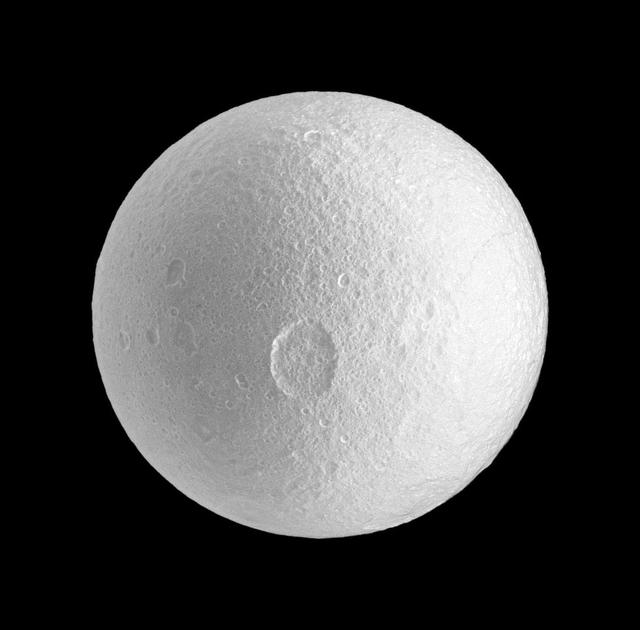
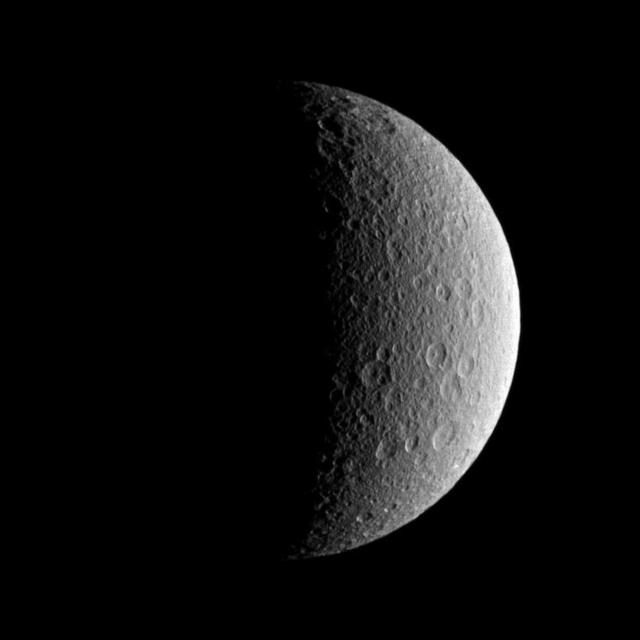
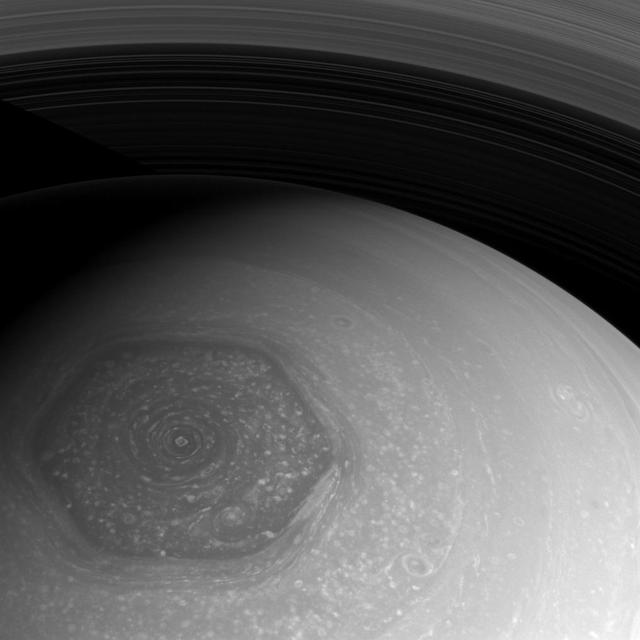
Cassini was one of the most ambitious planetary missions ever flown, and it gave us Saturn in extraordinary depth. A joint effort of NASA, ESA and the Italian space agency, it launched on 15 October 1997 and used gravity assists from Venus, Earth and Jupiter to reach the ringed planet. On 1 July 2004 Cassini fired its engine to slip into orbit, becoming the first spacecraft ever to orbit Saturn. Bolted to its side was the European-built Huygens probe, which it released to parachute down to the giant moon Titan; on 14 January 2005 Huygens touched down on a frozen plain, the first landing in the outer Solar System and the most distant landing humans have ever achieved. Cassini went on to spend thirteen years circling Saturn, and its discoveries reshaped the field. It found towering geysers of water ice and vapour erupting from the south pole of tiny Enceladus, betraying a global ocean beneath its shell, laced with organic chemistry. It mapped seas of liquid methane and ethane on Titan — the only other place known to have standing surface liquid — and studied the rings, Saturn's vast hexagonal polar storm, and a flock of moons. As its fuel ran low, the mission ended in spectacular fashion: a 'Grand Finale' of 22 daring dives between the planet and its rings, followed on 15 September 2017 by a deliberate plunge into Saturn's atmosphere, so the spacecraft could never contaminate the ocean worlds it had found.
- 1997Launch toward SaturnLaunch
Cassini and the Huygens probe depart on a seven-year, gravity-assisted cruise.
Fires its engine to become the first spacecraft ever to orbit Saturn.
The probe parachutes to Titan's surface — the most distant landing ever achieved.
Finds icy plumes venting from the south pole, revealing a global ocean beneath the crust.
Radar maps lakes and seas of liquid methane — the only other world with standing surface liquid.
- 2017The Grand Finale beginsMilestone
Starts 22 daring dives through the gap between Saturn and its rings.
Ends with a deliberate descent into the atmosphere, protecting the moons it discovered.
Images




Images from open archives · credit shown per image