Deep Impact
Deep Impact — fired an impactor into comet Tempel 1 (2005) to expose and study its interior; later flew by comet Hartley 2.
Key facts
Mission & specifications
Mission
- Operator
- NASA
- Launched
- January 12, 2005
- Status
- Completed
Trajectory
- Current speed
- 29.4 km/s
- Computed from the cached state vector
- Distance from the Sun
- 1.06 AU
- Computed from the cached position
- Distance from Earth
- 0.395 AU
- Computed from cached positions
- Distance from Venus
- 0.502 AU
- Computed from cached positions
Cost & funding
- Program cost
- $3.30 × 10⁸ USD
Mission
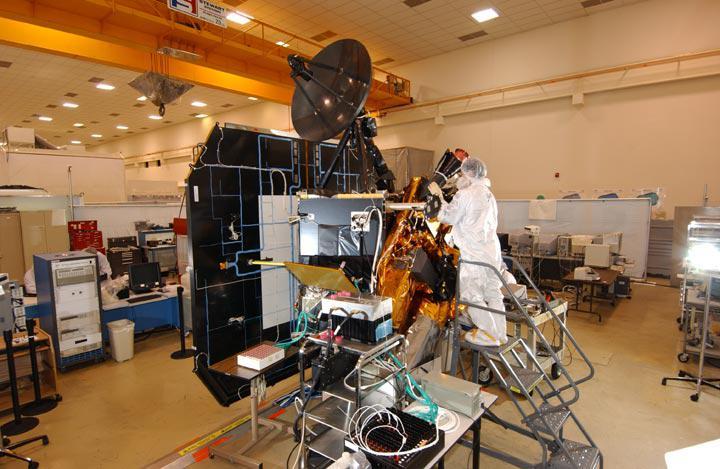
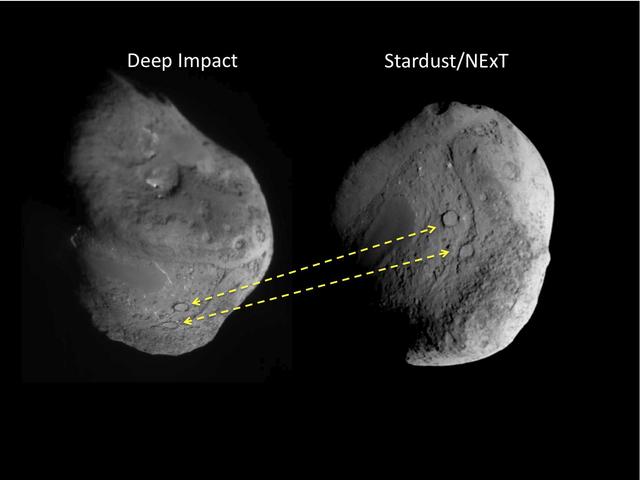
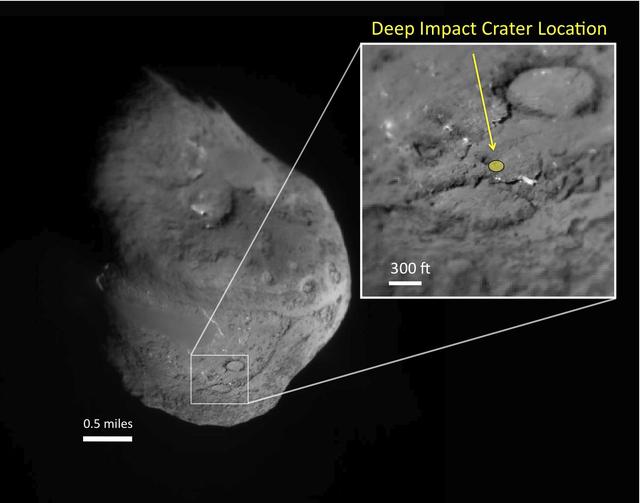
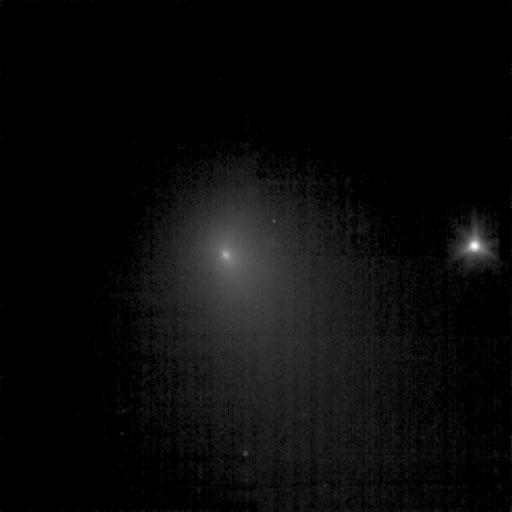
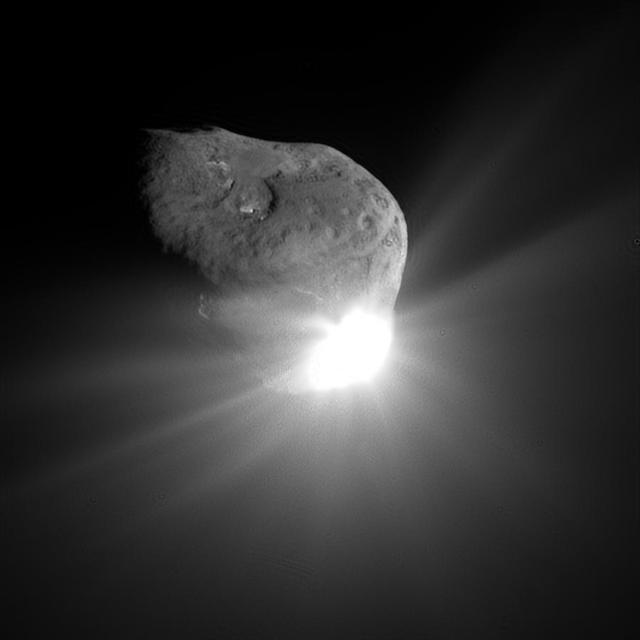
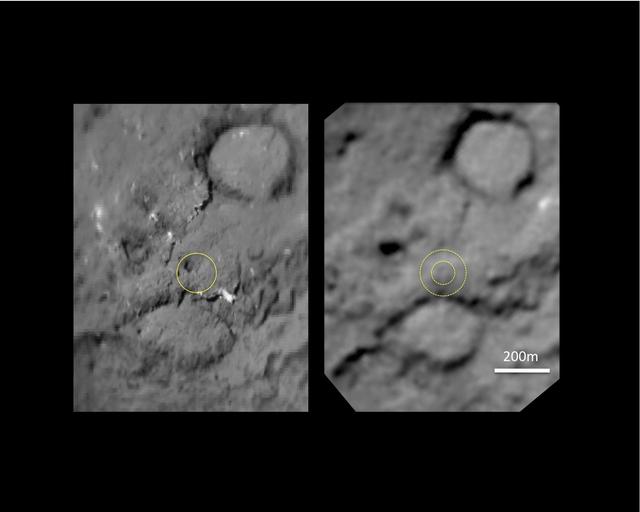
Deep Impact set out to do something no mission had attempted: to punch a hole in a comet and look at what lay inside. Launched on 12 January 2005, it consisted of a flyby spacecraft and a 370-kilogram copper-weighted impactor. As it neared comet Tempel 1, the spacecraft released the impactor into the comet's path, and on 4 July 2005 the comet ran into it at about 37,000 kilometres per hour. The collision blasted out a brilliant plume of debris that the flyby craft, and telescopes across the Solar System, watched closely. The excavated material revealed that the comet's interior was made of extremely fine, fluffy, porous dust — more like talcum powder than solid ice — and contained more dust relative to ice than expected, reshaping ideas about how comets are built. The impact threw out so much material that it temporarily hid the new crater from view. With its primary craft still working, NASA sent Deep Impact on an extended mission, renamed EPOXI, which flew close past a second comet, Hartley 2, in 2010, capturing jets of carbon-dioxide gas erupting from its peanut-shaped nucleus. Contact with the spacecraft was finally lost in 2013.
- 2005Launch toward comet Tempel 1Launch
Carries a flyby craft and a heavy copper impactor to a comet.
The comet runs into the impactor at ~37,000 km/h; the flyby craft watches the plume.
Renamed EPOXI, it images jets of gas erupting from a small peanut-shaped comet.
- 2013Contact lostMission end
Communication with the spacecraft is lost after years of extended operations.
Images

Images from open archives · credit shown per image