
Mariner 9
Mariner 9 — NASA's 1971 Mars orbiter and the first spacecraft to orbit another planet. After waiting out a global dust storm, it mapped about 85% of Mars and revealed its giant volcanoes and the canyon named for it.
Key facts
Mission & specifications
Mission
- Operator
- NASA / JPL
- Launched
- May 30, 1971
- Status
- Completed
Trajectory
- Distance from the Sun
- 1.57 AU
- Computed from the cached position
- Distance from Earth
- 1.51 AU
- Computed from cached positions
- Distance from Mars
- 7,394,066 km
- Computed from cached positions
Mission
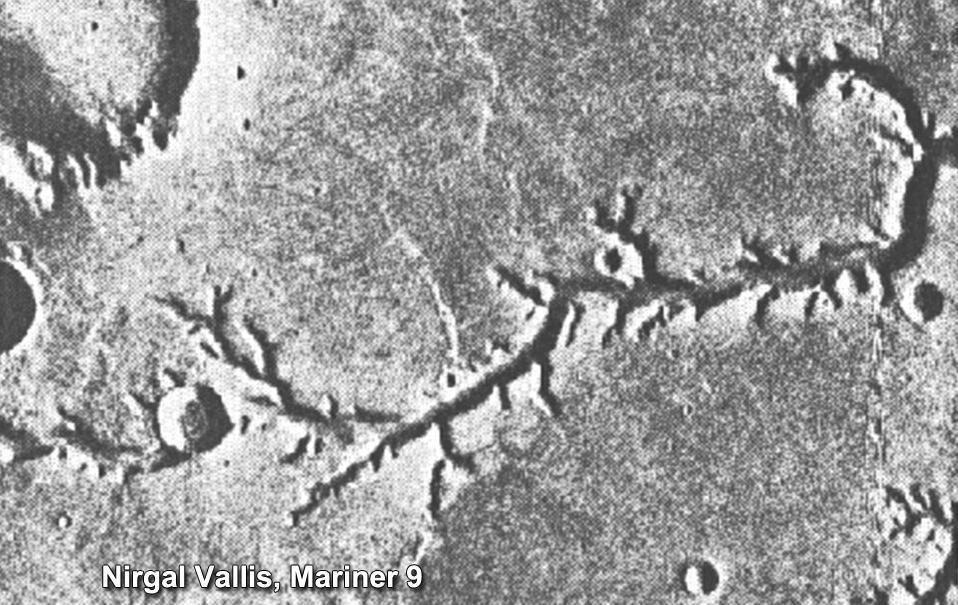
Mariner 9 changed Mars from a point of light into a world. Launched in 1971, that November it became the first spacecraft ever to orbit another planet — reaching Mars just weeks ahead of two Soviet probes and opening the era of planetary orbiters that continues today. Its arrival was almost an anticlimax. When Mariner 9 got there, the entire planet was shrouded in one of the greatest dust storms ever recorded — the surface completely hidden, only the dark summits of the tallest peaks poking through the haze. Rather than waste its film on a blank ochre veil, the team made a fateful choice: they waited. For weeks the orbiter circled, holding its cameras, until the dust slowly settled. What it then revealed astonished scientists. The peaks that had risen above the storm were colossal volcanoes, among them Olympus Mons, the largest in the Solar System and three times the height of Everest. Across the surface stretched a canyon system so vast it was named Valles Marineris in the spacecraft's honour, along with dry riverbeds seemingly carved by ancient water. Mapping about 85% of the planet, Mariner 9 transformed Mars from a cratered curiosity glimpsed by earlier flybys into the geologically rich, once-watery world that every later mission has gone to explore.
- 1971Launch toward MarsLaunch
NASA sends the first would-be orbiter of another planet on its way.
Mariner 9 arrives to find Mars hidden by a planet-wide dust storm.
As the storm settles, giant volcanoes and a vast canyon system emerge.
- 1972Mission endsMission end
Having mapped ~85% of Mars, the orbiter is switched off.
Images

Images from open archives · credit shown per image