
ExoMars Trace Gas Orbiter
ExoMars TGO — sniffs Mars' atmosphere for trace gases and relays rover data.
Key facts
Mission & specifications
Mission
- Operator
- ESA / Roscosmos
- Launched
- March 14, 2016
- Status
- Active
Trajectory
- Speed rel. Mars
- 3.37 km/s
- Computed from the cached state vector, relative to Mars
- Distance from the Sun
- 1.57 AU
- Computed from the cached position
- Distance from Earth
- 1.49 AU
- Computed from cached positions
- Distance from Mars
- 11,523,203 km
- Computed from cached positions
Mission
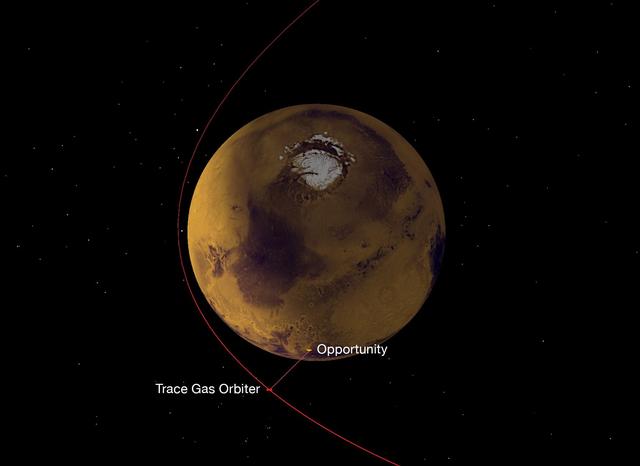
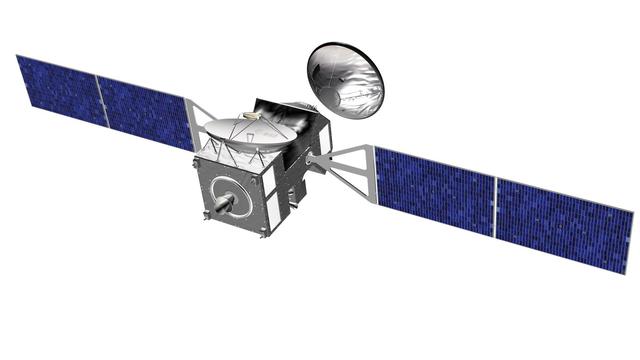
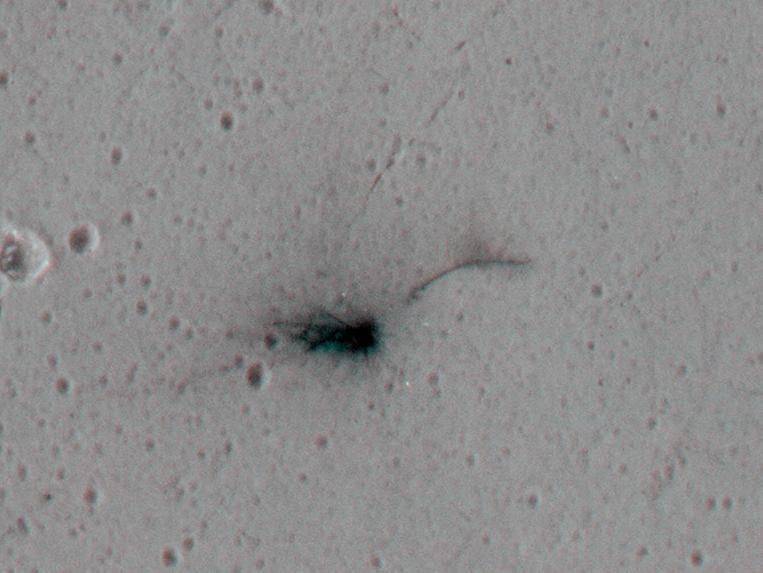
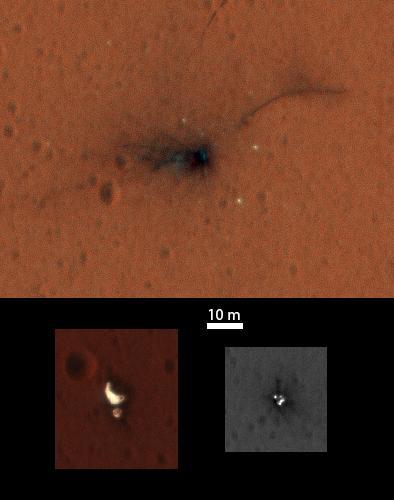
The ExoMars Trace Gas Orbiter is a European–Russian spacecraft sent to sniff the Martian atmosphere for the faint chemical hints of present-day activity — whether geological or, conceivably, biological. Launched on 14 March 2016, it arrived at Mars on 19 October 2016 and spent more than a year delicately aerobraking, dipping into the upper atmosphere on each orbit to shed energy and settle into a circular 400-kilometre science orbit by 2018. Its instruments are tuned to detect gases present at just parts per billion, above all methane — a gas that on Earth is largely produced by life, and whose reported but disputed presence on Mars has tantalised scientists for years. TGO's highly sensitive surveys have so far found no clear sign of methane in the bulk atmosphere, sharpening one of the planet's enduring puzzles, while also mapping subsurface hydrogen — a proxy for buried water ice — to help find safe, resource-rich sites for future missions. The orbiter carried the Schiaparelli demonstration lander, which was lost during its descent in October 2016 when a software fault made it think it had already landed, a hard lesson dissected in detail afterwards. Beyond its own science, TGO serves as a vital data-relay satellite, carrying signals between Earth and the rovers working on the surface below, including NASA's Perseverance.
- 2016Launch toward MarsLaunch
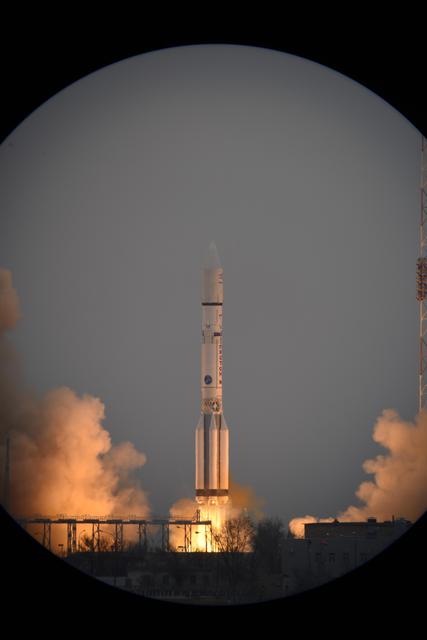
A Proton rocket sends the European–Russian orbiter and the Schiaparelli lander toward Mars.
TGO enters orbit; the Schiaparelli demonstration lander is lost during its descent.
More than a year of aerobraking circularises the orbit and full atmospheric science begins.
- 2019Sensitive surveys find little methaneMilestone
Highly sensitive measurements detect no clear methane, deepening a long-standing Martian puzzle.
Images
Images from open archives · credit shown per image