
Apollo 12
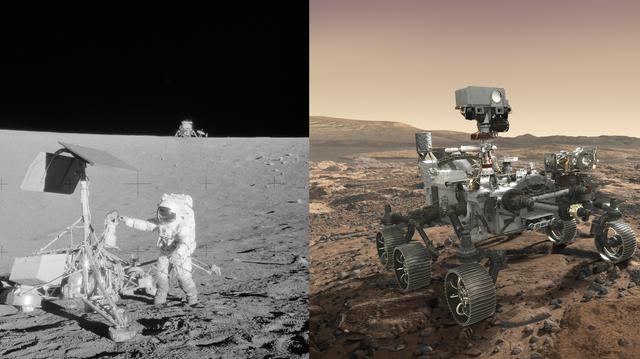
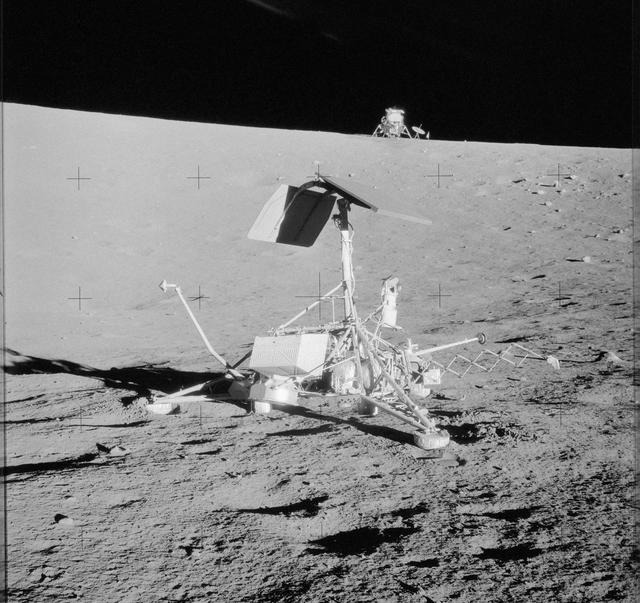
Apollo 12 — the second Moon landing (November 1969). Pete Conrad and Alan Bean touched down in the Ocean of Storms, walking to the Surveyor 3 probe that had landed there two years earlier.
Key facts
Mission & specifications
Mission
- Operator
- NASA
- Launched
- November 14, 1969
- Status
- Completed
Trajectory
- Distance from the Sun
- 1.01 AU
- Computed from the cached position
- Distance from Earth
- 0.391 AU
- Computed from cached positions
- Distance from Venus
- 0.395 AU
- Computed from cached positions
Mission
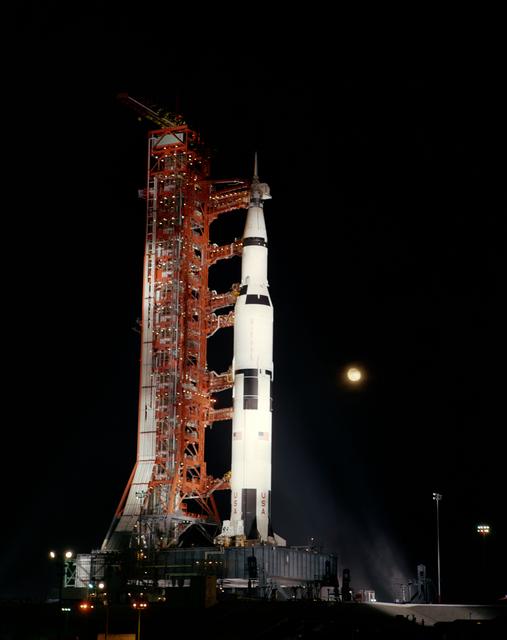
Apollo 12 was the programme's second Moon landing, and it proved the first had been no fluke. Launched on 14 November 1969 into a rainstorm, the Saturn V was struck by lightning twice in the first minute, briefly knocking the Command Module's systems offline — a quick-thinking flight controller's call to flip an obscure switch ('SCE to Auxiliary') saved the mission before it had even left the atmosphere. Commander Pete Conrad, the third person to walk on the Moon, and Alan Bean landed with pinpoint precision in the Ocean of Storms, touching down within walking distance of Surveyor 3, an uncrewed probe that had soft-landed there two and a half years earlier. The two moonwalkers visited the old spacecraft and cut pieces from it to bring home, letting engineers study how its materials had weathered the lunar environment. Conrad and Bean made two excursions and deployed a nuclear-powered science station over a day and a half on the surface. Where Apollo 11 had been a triumph of arrival, Apollo 12 was a triumph of precision — proof that astronauts could land exactly where scientists wanted them.
- 1969Launch through a stormLaunch
Lightning strikes the Saturn V twice after liftoff; a quick call ('SCE to Auxiliary') restores the spacecraft's systems.
Conrad and Bean touch down in the Ocean of Storms within walking distance of the Surveyor 3 probe.
The crew cut parts from Surveyor 3 to bring home, to study how they weathered two years on the Moon.
- 1969SplashdownMission end
The second Moon landing proves astronauts can land exactly where scientists choose.
Images

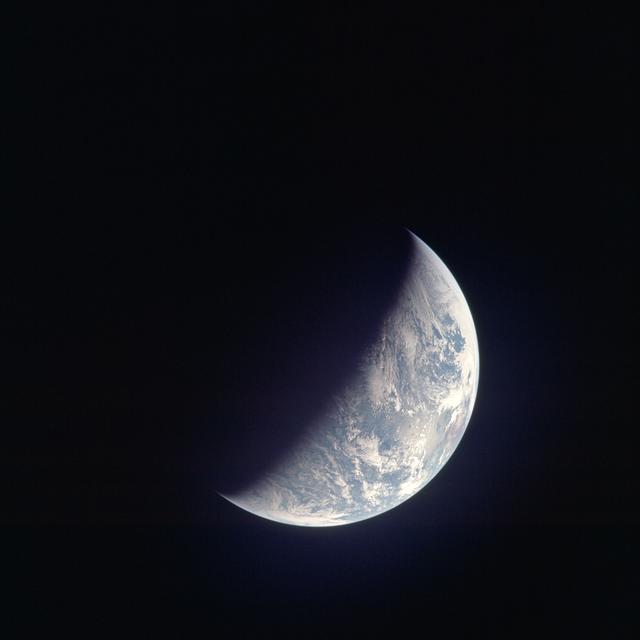
Images from open archives · credit shown per image