
Earth
Earth is the third planet from the Sun and the only world known to harbour life. Liquid water covers 71% of its surface, and a protective magnetic field and nitrogen–oxygen atmosphere make it habitable.
Key facts
Science
Physical
- Mass
- 5.97 × 10²⁴ kg · 1 M⊕ (defines the unit)
- Radius
- 6,371 km · 1 R⊕ (defines the unit)
- Density
- 5,513 kg/m³ · 5.5× water
- Computed from mass and radius
- Surface gravity
- 9.82 m/s² · 1 g (defines the unit)
- Computed from mass and radius
- Escape velocity
- 11.2 km/s
- Computed from mass and radius
- Axial tilt
- 23.44 °
Orbital
- Distance from the Sun
- 0.996 AU
- Computed from the position at the selected time
- Semi-major axis
- 1 AU
- Computed from the cached state vector
- Eccentricity
- 0.01702
- Computed from the cached state vector
- Inclination
- 23.43 °
- Computed from the cached state vector
- Orbital period
- 365.3 days
- Computed from the cached state vector
- Perihelion
- 0.983 AU
- Computed from the orbital elements
- Aphelion
- 1.02 AU
- Computed from the orbital elements
- Mean orbital velocity
- 29.8 km/s
- Computed from the orbital elements
Rotation
- Rotation period
- 23.93 hours
Atmosphere
- Composition
- 78% N₂, 21% O₂, ~1% Ar
- Surface pressure
- 1.01 bar
- Scale height
- 8.5 km
Temperature
- Minimum
- 184 K (-89 °C)
- Mean
- 288 K (15 °C)
- Maximum
- 330 K (57 °C)
Composition
- Bulk composition
- Iron–nickel core, silicate mantle and crust; global oceans
Radiation & temperature
- Insolation
- 1 S⊕ · ≈ the sunlight Earth receives
- Computed from the distance to the Sun (inverse-square; Earth's sunlight = 1), before any atmosphere.
- Bond albedo
- 0.31 · reflects 31% of incoming sunlight
- Equilibrium temperature
- 254 K (-19 °C)
- Computed from albedo + distance from the Sun (airless black body)
- Measured mean temperature
- 288 K (15 °C)
- Greenhouse warming
- +34 K
- Measured temperature minus the airless equilibrium — the greenhouse effect
- Surface magnetic field
- 50 µT · ≈ Earth's magnetic field
Discovery & history
- First known
- Humanity's home world
- Name
- From Old English 'eorþe' ('ground') — the only planet not named for a Greco-Roman deity.
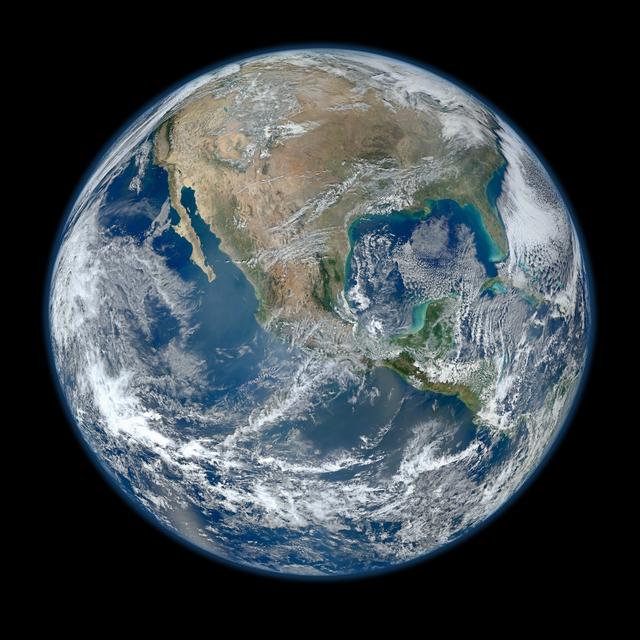
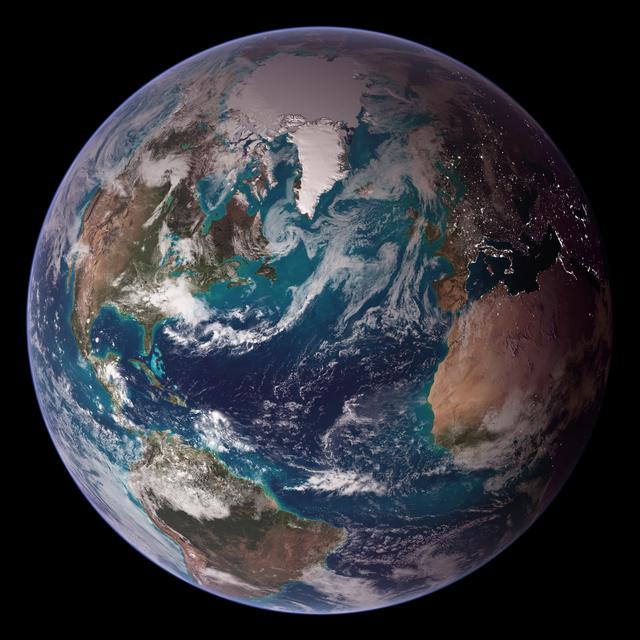
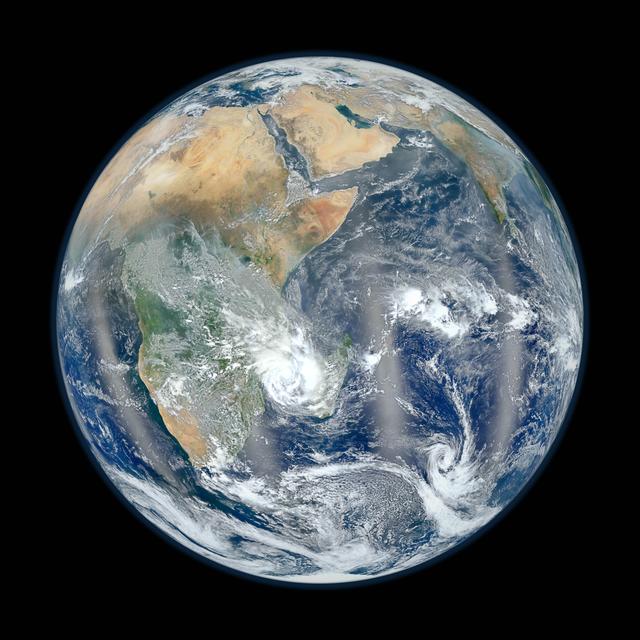
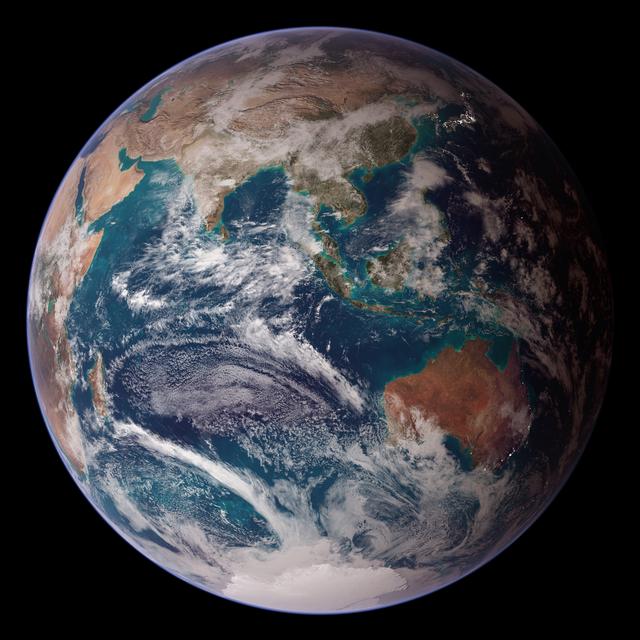
Earth is humanity's home world; it was never 'discovered'. The realisation that it is itself a planet — a sphere moving through space rather than the fixed centre of the cosmos — was hard-won, from the ancient Greeks who measured its circumference to Copernicus, Galileo and Newton. The Space Age finally let us see it whole: 'Earthrise' (1968) and 'The Blue Marble' (1972) showed a fragile blue world, and Voyager 1's 'Pale Blue Dot' (1990) captured it as a speck against the dark.
The crew captured 'Earthrise', the first colour photograph of Earth from lunar orbit.
Returned 'The Blue Marble', among the most reproduced photographs in history.
Photographed Earth as a tiny dot from beyond Neptune's orbit, 6 billion km away.
Images

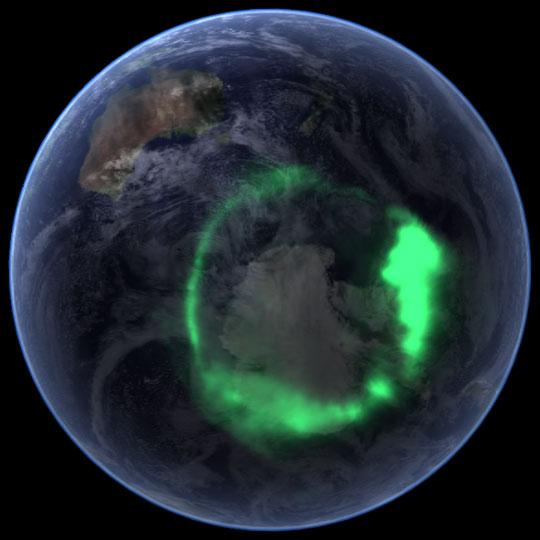
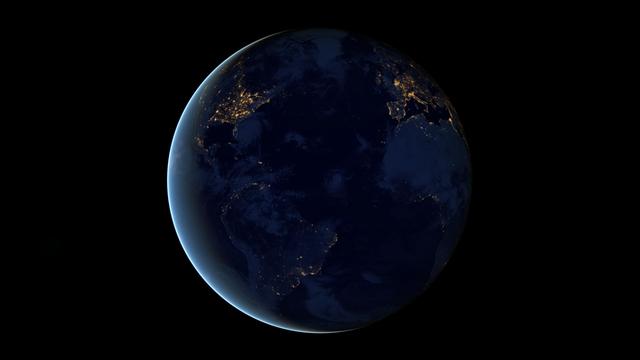
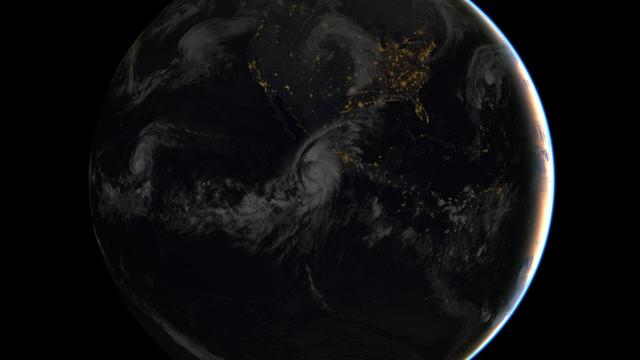
Images from open archives · credit shown per image