
Artemis II
Artemis II — the first crewed flight beyond low Earth orbit since Apollo 17 (1-10 April 2026). Reid Wiseman, Victor Glover, Christina Koch and Jeremy Hansen flew Orion 'Integrity' on a free-return loop past the Moon's far side.
Key facts
Mission & specifications
Mission
- Operator
- NASA
- Launched
- April 1, 2026
- Status
- Completed
Trajectory
- Distance from the Sun
- 0.998 AU
- Computed from the cached position
- Distance from Earth
- 7,927,923 km
- Computed from cached positions
- Distance from Venus
- 0.276 AU
- Computed from cached positions
Mission
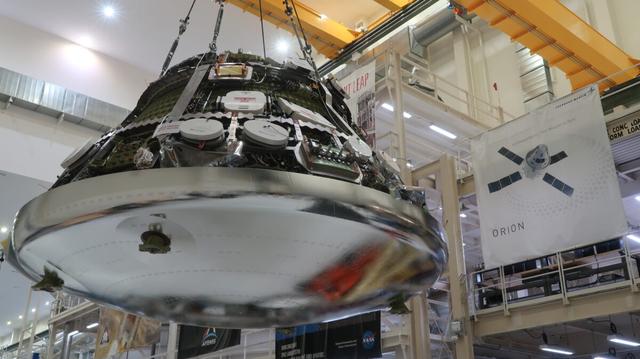
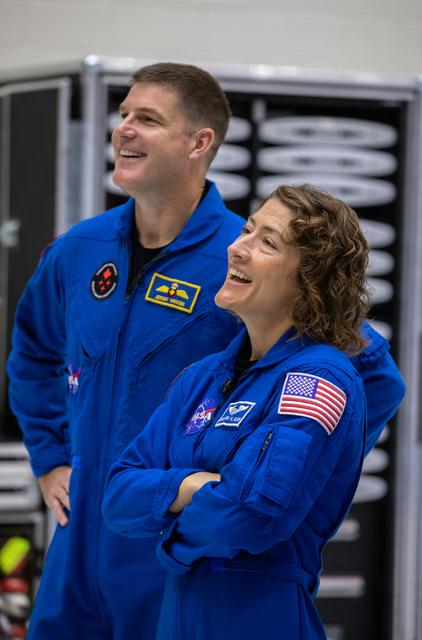
Artemis II carried humans beyond low Earth orbit for the first time since Apollo 17 in December 1972 — closing a gap of more than fifty-four years in which no one had ventured past the near-Earth realm. Where the uncrewed Artemis I had tested the hardware, Artemis II put a crew aboard Orion and sent them around the Moon. Commander Reid Wiseman led the four. The crew included Christina Koch, holder of the record for the longest single spaceflight by a woman (328 days), and Victor Glover, the first African-American astronaut assigned to a lunar mission. Jeremy Hansen became the first Canadian to travel to the Moon. They flew aboard the Orion spacecraft they named Integrity, which launched on NASA's Space Launch System from Launch Complex 39B at Kennedy Space Center on the evening of 1 April 2026. After reaching a high Earth orbit and checking out the spacecraft's systems, the upper stage fired a trans-lunar injection burn that set Integrity on course for the Moon. Artemis II flew a free-return trajectory — a path that loops once behind the Moon and uses lunar gravity to swing the craft naturally back toward Earth, requiring no capture burn and giving the safest possible profile for a first crewed flight. Over the following days Orion coasted outward, the crew exercising its life-support, navigation and communications along the way. Around the fifth and sixth days they passed behind the Moon's far side — the hemisphere never visible from Earth — and watched their home planet slip behind the lunar horizon and rise again, photographing the 'Earthset' through Orion's windows from farther away than any living person had been. That far-side imagery became some of the mission's defining pictures. Lunar gravity then slung Integrity back toward home. After a return coast of several days the spacecraft re-entered the atmosphere at nearly forty thousand kilometres per hour and, on 10 April 2026, splashed down in the Pacific Ocean off the coast of San Diego, where a US Navy ship recovered the crew after roughly ten days in space. Artemis II carried no lander and made no landing, but its purpose was proof — that Orion could keep a crew alive on the voyage to the Moon and back. It returned humans to deep space after two generations away, and set the stage for the landing to come on Artemis III.
- 2026Launch from Kennedy's Pad 39BLaunch
The first crew to leave low Earth orbit since 1972 lifts off on SLS: Wiseman, Glover, Koch and Hansen.
The upper stage fires Orion 'Integrity' out of Earth orbit and onto a free-return path to the Moon.
The crew loops behind the Moon's far side, watching Earth rise and set through Orion's windows.
- 2026Homeward on a free returnMilestone
Lunar gravity slingshots Integrity back toward Earth without another major burn.
Integrity re-enters and splashes down off San Diego after ~10 days; the crew is recovered safely.
Images


Images from open archives · credit shown per image