Apollo 8
Apollo 8 — the first crewed mission to leave Earth orbit and circle the Moon (December 1968).
Key facts
Mission & specifications
Mission
- Operator
- NASA
- Launched
- December 21, 1968
- Status
- Completed
Trajectory
- Distance from the Sun
- 0.998 AU
- Computed from the cached position
- Distance from Earth
- 6,008,040 km
- Computed from cached positions
- Distance from Venus
- 0.278 AU
- Computed from cached positions
Mission
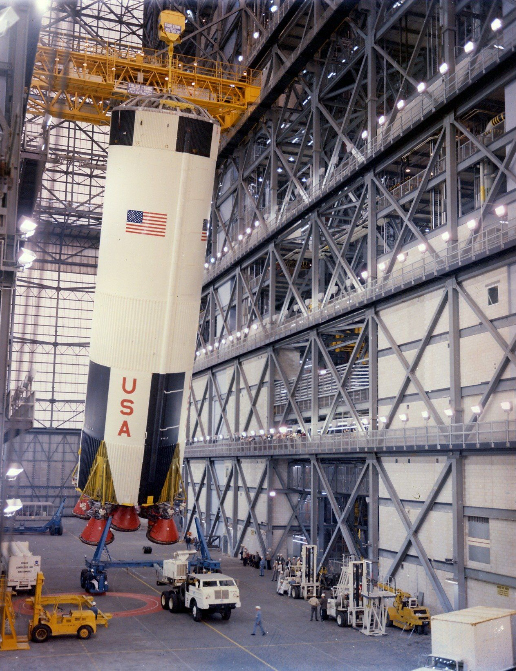
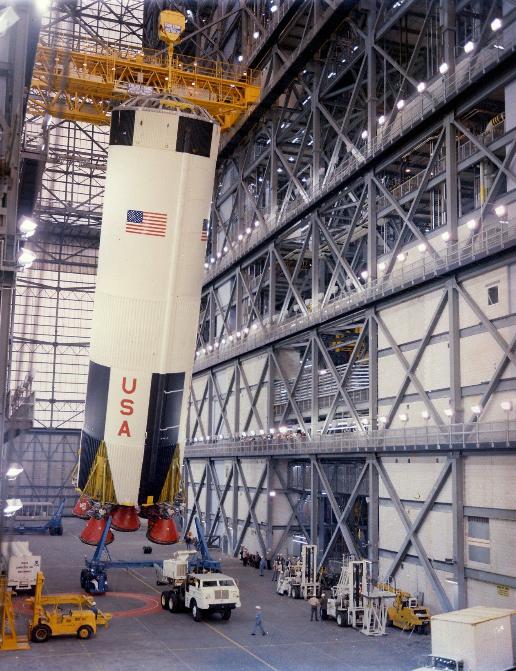
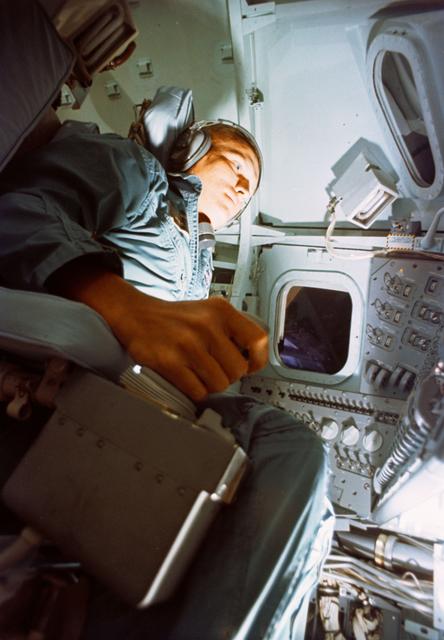
Apollo 8 was humanity's first voyage to another world, and one of the boldest decisions in the history of spaceflight. It was originally planned as a cautious test of the Lunar Module in Earth orbit, but when the lander fell behind schedule — and with intelligence suggesting the Soviet Union might attempt its own crewed flight around the Moon — NASA made an audacious switch: it would send Apollo 8 all the way to the Moon, without a lander, on only the third flight of the giant Saturn V and the first to carry a crew. On 21 December 1968 Frank Borman, James Lovell and William Anders lifted off from Kennedy Space Center, and a few hours later their third-stage engine reignited to push them out of Earth orbit — the first time humans had ever left the gravitational embrace of their home planet. After a three-day cruise they slipped into orbit around the Moon on Christmas Eve, becoming the first people to see its far side and to watch the whole Earth hanging in the black sky. Anders photographed the now-famous 'Earthrise', a small blue planet rising over the barren grey limb of the Moon, and that evening the crew read from the Book of Genesis to the largest television audience in history. After ten orbits they fired their engine to return, splashing down in the Pacific on 27 December. Apollo 8 proved the trajectory, navigation and spacecraft that would carry Apollo 11 to its landing seven months later.
- 1968The first crew launched on a Saturn V rocketLaunch
Borman, Lovell and Anders lift off from Kennedy Space Center on the rocket's third flight.
- 1968Trans-lunar injectionMilestone
The third stage reignites, and humans leave Earth orbit for the first time.
The crew enters orbit around the Moon, the first people to see its far side directly.
Anders photographs Earth rising over the Moon; the crew reads from Genesis to a record audience.
- 1968Trans-Earth injectionMilestone
After ten orbits, an engine burn on the Moon's far side sends Apollo 8 home.
Apollo 8 returns safely, having proved the route to the Moon.
Images
Images from open archives · credit shown per image