
Apollo 7
Apollo 7 — the first crewed Apollo flight (October 1968), an 11-day Earth-orbit shakedown of the Command/Service Module that cleared Apollo to fly to the Moon.
Key facts
Mission & specifications
Mission
- Operator
- NASA
- Launched
- October 11, 1968
- Status
- Completed
Trajectory
- Distance from the Sun
- 0.998 AU
- Computed from the cached position
- Distance from Earth
- 8,311,477 km
- Computed from cached positions
- Distance from Venus
- 0.276 AU
- Computed from cached positions
Mission
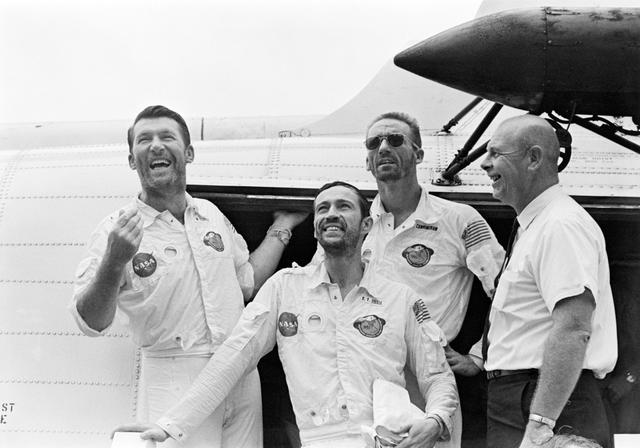
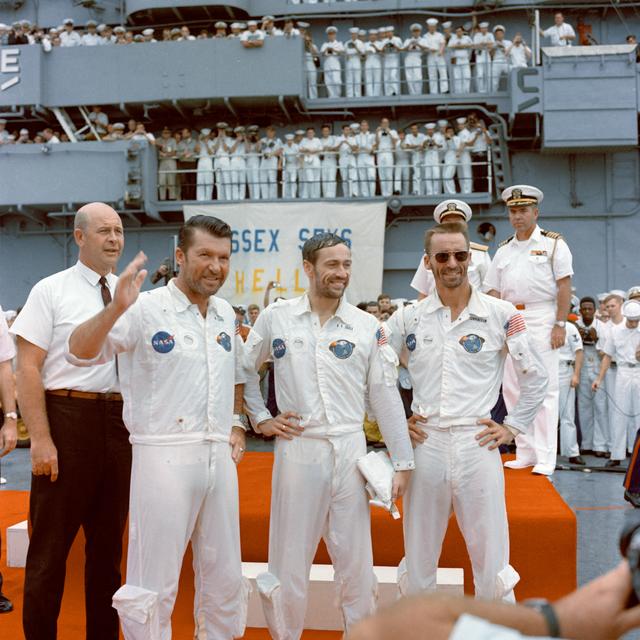
Apollo 7 was the programme's redemption — the first crewed Apollo flight, launched on 11 October 1968, twenty-one months after the Apollo 1 fire. Wally Schirra, Donn Eisele and Walt Cunningham rode a Saturn IB into Earth orbit for an eleven-day shakedown of the redesigned Command and Service Module, the spacecraft's first crewed test after the accident. It was an engineering triumph: the module performed almost flawlessly, its big service-module engine firing eight times without fault, and the crew rehearsed the rendezvous techniques the Moon missions would need. It also produced the first live television from an American crewed spacecraft — the cheerful, irreverent broadcasts that introduced viewers to life in orbit. The flight was not without friction: Schirra developed a head cold, and the crew's irritability and pushback against mission control became famous, none of the three ever flying in space again. But Apollo 7 did exactly what it had to do — prove the rebuilt spacecraft was ready — and cleared the way for Apollo 8's bold voyage to the Moon just two months later.
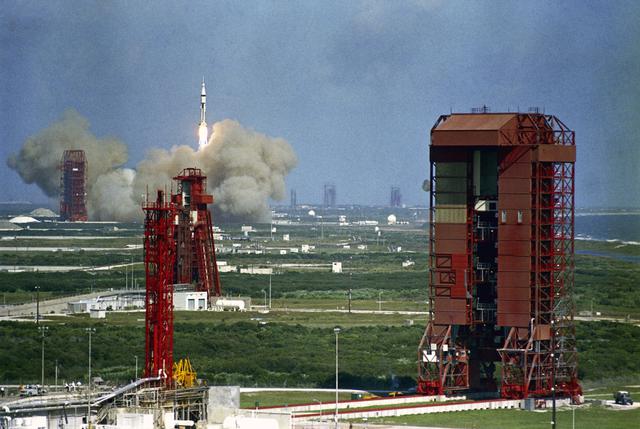
- 1968The first crewed Apollo launchesLaunch
Schirra, Eisele and Cunningham reach Earth orbit for an 11-day test of the redesigned Command and Service Module.
The crew broadcasts the first live television from an American crewed spacecraft.
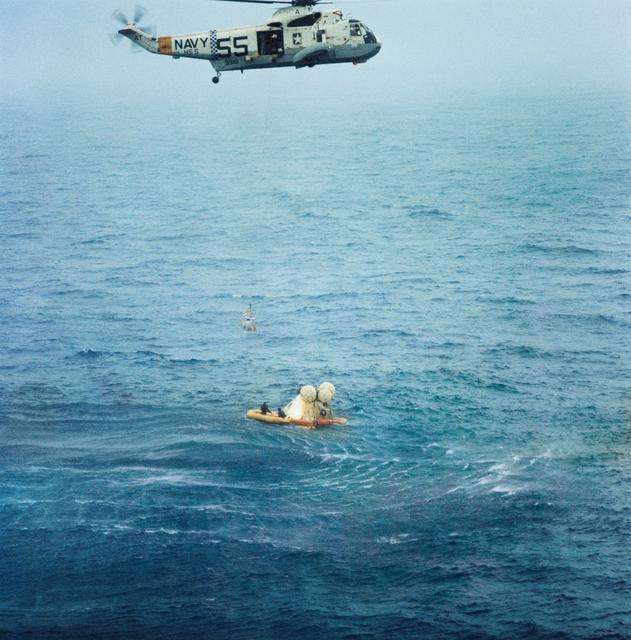
- 1968SplashdownMission end
Apollo 7 returns after a near-flawless shakedown, clearing Apollo to fly to the Moon.
Images

Images from open archives · credit shown per image