
Apollo 13
Apollo 13 — the 'successful failure' (April 1970). An oxygen tank exploded en route to the Moon; the crew used the Lunar Module as a lifeboat and looped around the Moon to return home alive.
Key facts
Mission & specifications
Mission
- Operator
- NASA
- Launched
- April 11, 1970
- Status
- Completed
Trajectory
- Distance from the Sun
- 0.998 AU
- Computed from the cached position
- Distance from Earth
- 1,109,505 km
- Computed from cached positions
- Distance from Venus
- 0.288 AU
- Computed from cached positions
Mission
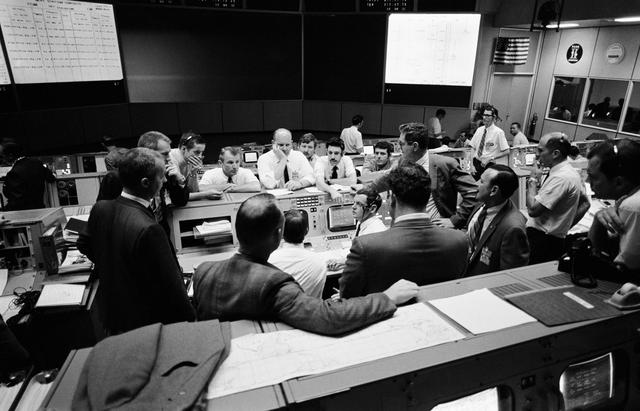
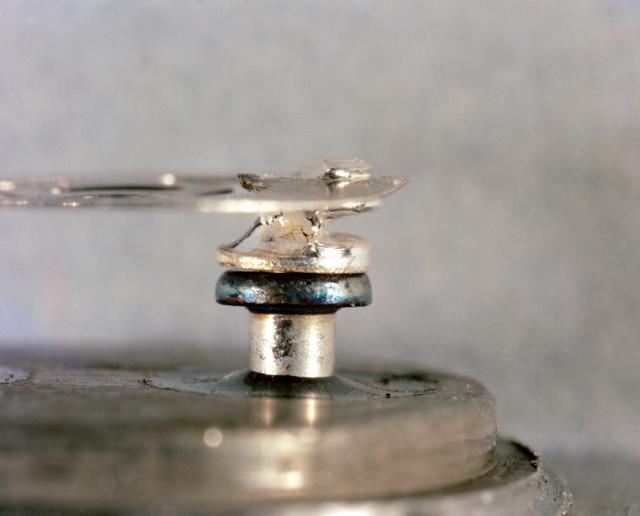
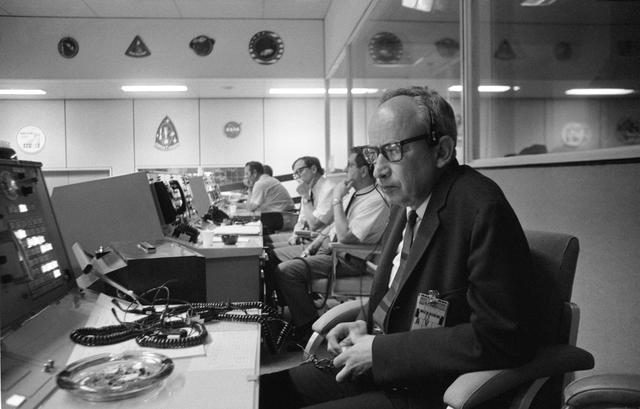
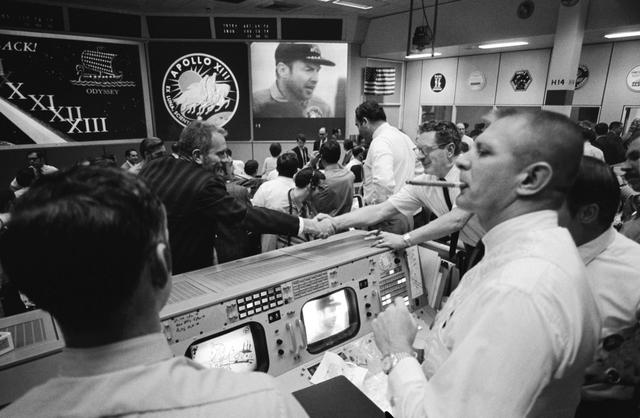
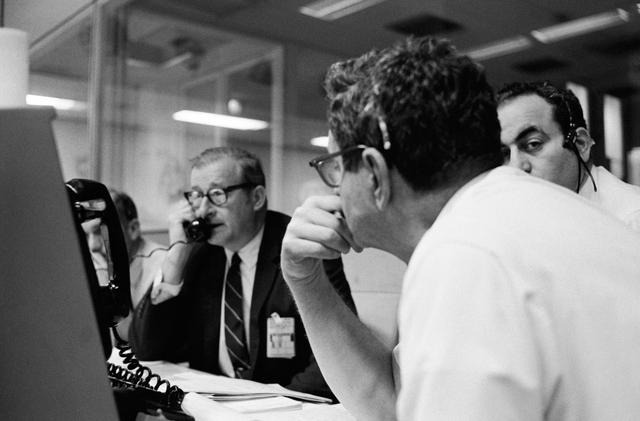
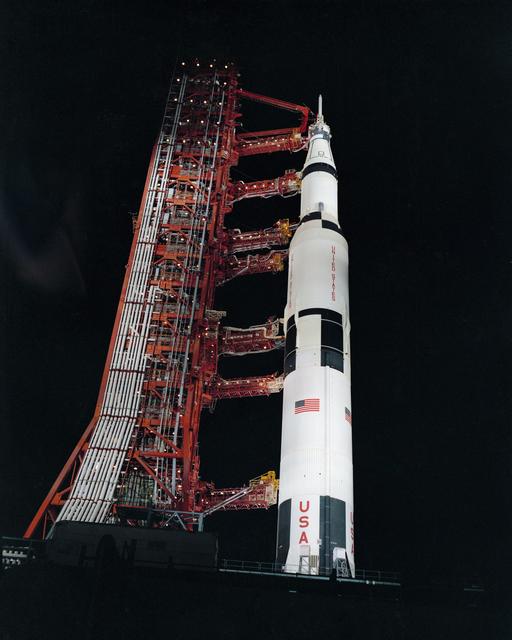
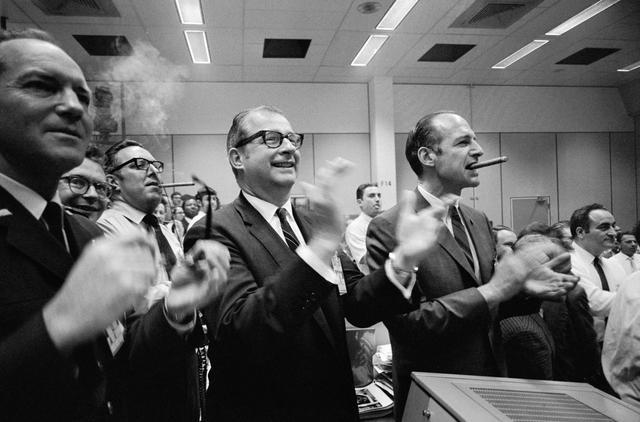
Apollo 13 was to be the third lunar landing; instead it became spaceflight's most famous rescue — the 'successful failure'. Launched on 11 April 1970 with James Lovell, Jack Swigert and Fred Haise, the mission was running smoothly until, on the evening of 13 April, a routine request from the ground to stir the Service Module's cryogenic tanks caused an oxygen tank to explode. Damaged insulation inside the tank had ignited, blowing out the side of the Service Module. 'Houston, we've had a problem,' Swigert and then Lovell reported, as the crew watched their oxygen and electrical power bleed away some 320,000 kilometres from Earth. The Moon landing was abandoned within hours; survival was now the only goal. With the Command Module dying, the crew shut it down to preserve its re-entry batteries and retreated into the Lunar Module 'Aquarius' as a makeshift lifeboat — a craft built for two men for two days, now keeping three alive for four. In Houston, flight director Gene Kranz's team improvised relentlessly: they swung the spacecraft around the Moon on a free-return trajectory, nursed dwindling power and water, and famously devised a way to fit the Command Module's square carbon-dioxide scrubbers into the Lunar Module's round receptacles using only what was aboard — tape, cardboard and a sock. The controller Sy Liebergot had been the first to read the failing telemetry; now the whole of mission control worked the problem hour by hour. Cold, exhausted and dehydrated, the crew powered the frozen Command Module back to life for the final plunge and splashed down safely in the Pacific on 17 April. Apollo 13 flew no science, yet it became NASA's finest demonstration of teamwork and improvisation under pressure.
- 1970Apollo 13 launchesLaunch
Lovell, Swigert and Haise set out for the Fra Mauro highlands.
- 1970'Houston, we've had a problem'Milestone
An oxygen tank explodes, crippling the Service Module some 320,000 km from Earth; the landing is abandoned.
The crew shelter in the Lunar Module 'Aquarius' and swing around the Moon on a free-return path toward home.
- 1970The carbon-dioxide fixMilestone
Mission control devises a way to join the wrong-shaped CO2 scrubbers with tape and cardboard, saving the air.
- 1970SplashdownMission end
The crew power up the frozen Command Module and splash down safely in the Pacific — a 'successful failure'.
Images

Images from open archives · credit shown per image