
DSCOVR
DSCOVR — stationed at the Earth–Sun L1 point (since 2015); its EPIC camera images the full sunlit disk of Earth.
Key facts
Mission & specifications
Mission
- Operator
- NOAA / NASA
- Launched
- February 11, 2015
- Status
- Active
Trajectory
- Speed rel. Earth
- 245 m/s
- Computed from the cached state vector, relative to Earth
- Distance from the Sun
- 0.988 AU
- Computed from the cached position
- Distance from Earth
- 4,180,666 km
- Computed from cached positions
- Distance from Venus
- 0.276 AU
- Computed from cached positions
Mission
DSCOVR, the Deep Space Climate Observatory, keeps watch on the Sun from a vantage point a million miles from Earth. Its story is unusual: it was conceived in the late 1990s as 'Triana', a mission championed by then-Vice-President Al Gore to broadcast a live view of the whole sunlit Earth. The project was shelved for years and the finished spacecraft sat in storage, until it was revived for a more practical purpose and launched on 11 February 2015. DSCOVR sits at the L1 point, the place between the Earth and the Sun where their gravity balances and a spacecraft can hover, giving it an uninterrupted view of the stream of particles flowing from the Sun. Its primary job is space-weather forecasting: it watches the solar wind and gives roughly fifteen to sixty minutes' warning before a geomagnetic storm reaches Earth, protecting power grids and satellites. Facing the other way, its EPIC camera fulfils Triana's original vision, returning daily full-disc images of the sunlit Earth — and even catching the Moon as it drifts across the planet's face. DSCOVR remains operational, a quiet sentinel between the Earth and the Sun.
- 2015Launch after years in storageLaunch
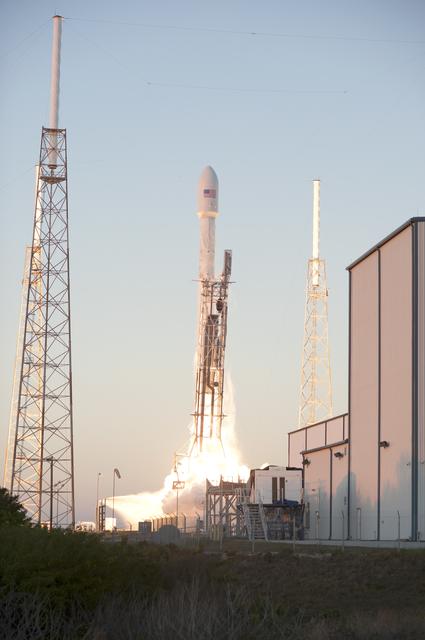
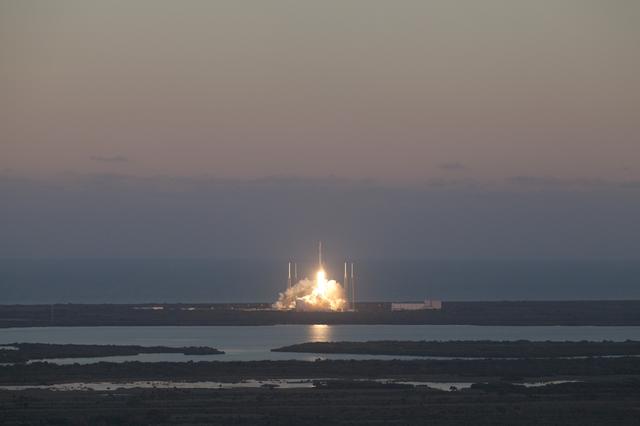
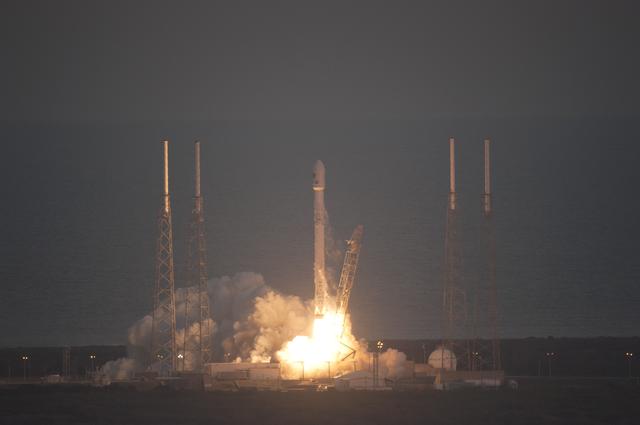
The long-shelved 'Triana' spacecraft finally flies, repurposed for space-weather watch.
- 2015Reaches L1, a gravitational balance point between Earth and the SunArrival
Settles a million miles sunward of Earth, where it can hover and watch the solar wind.
Its EPIC camera begins returning daily portraits of the whole sunlit planet.
EPIC captures the far side of the Moon passing in front of a sunlit Earth.
Images
Images from open archives · credit shown per image