
Gemini 7
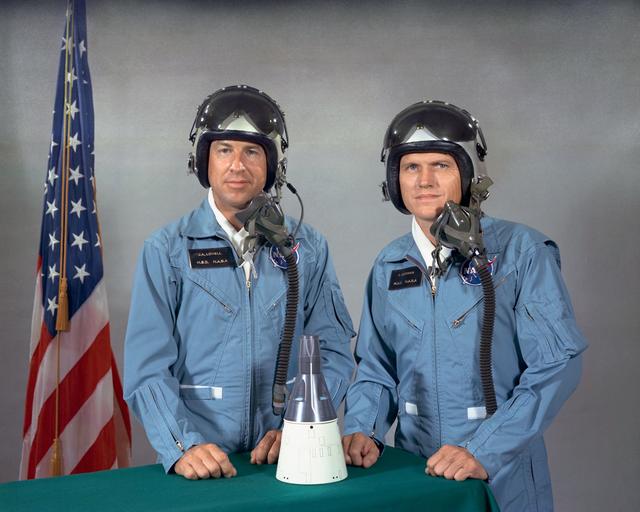
Gemini 7 — a 14-day endurance flight (December 1965) that showed a crew could last as long as a voyage to the Moon, and served as the target for Gemini 6A's rendezvous. Frank Borman and Jim Lovell.
Key facts
Mission & specifications
Mission
- Operator
- NASA
- Launched
- December 4, 1965
- Status
- Completed
Trajectory
- Distance from the Sun
- 0.998 AU
- Computed from the cached position
- Distance from Earth
- 850,879 km
- Computed from cached positions
- Distance from Venus
- 0.288 AU
- Computed from cached positions
Mission
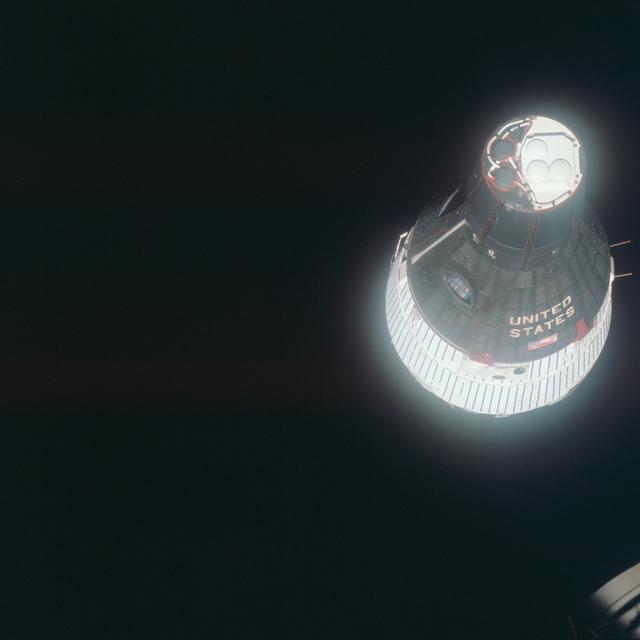
Gemini 7 answered the last great question before the Moon: could a crew live in space long enough to get there and back? Frank Borman and Jim Lovell launched on 4 December 1965 and stayed up for nearly fourteen days — cramped in a cabin the size of the front seats of a small car, shedding their bulky suits for comfort, enduring a monotony that tested the men as much as the machine. Halfway through they served as the passive target for Gemini 6A's rendezvous, then pressed on to a duration record that stood until Soyuz 9 in 1970. The medical data they brought home — that two weeks of weightlessness left them tired but unharmed — cleared the way for the eight-day Apollo lunar missions. Both men flew on to the Moon: Borman commanded Apollo 8, and Lovell flew both Apollo 8 and the near-disaster of Apollo 13.
- 1965Gemini 7 launchesLaunch
Borman and Lovell begin a two-week endurance flight — could a crew last as long as a Moon voyage?
Gemini 6A flies up and stations within a foot of Gemini 7 — the first rendezvous of two crewed craft.
- 1965Splashdown after 14 daysMission end
A duration record that stands until 1970, and medical proof a crew can endure a lunar-length mission. Recovered by USS Wasp.
Images


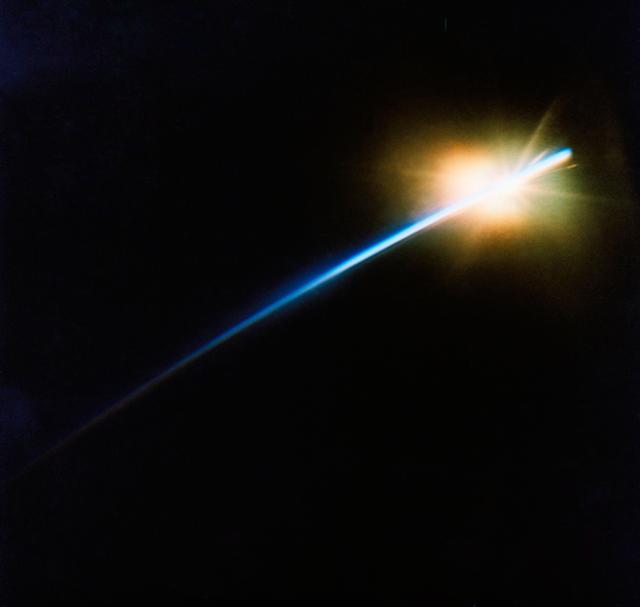

Images from open archives · credit shown per image