
Skylab 3
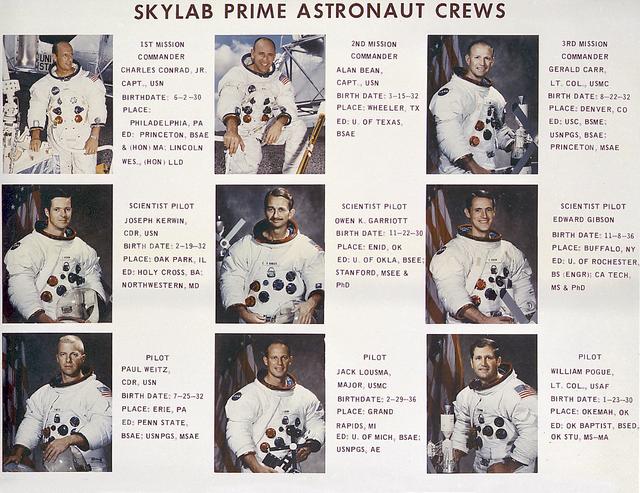
Skylab 3 — Alan Bean, Owen Garriott and Jack Lousma (July-September 1973) doubled the record to 59 days, proving a crew could work productively through months in orbit.
Key facts
Mission & specifications
Mission
- Operator
- NASA
- Launched
- July 28, 1973
- Status
- Completed
Trajectory
- Distance from the Sun
- 0.998 AU
- Computed from the cached position
- Distance from Earth
- 9,911,425 km
- Computed from cached positions
- Distance from Venus
- 0.276 AU
- Computed from cached positions
Mission
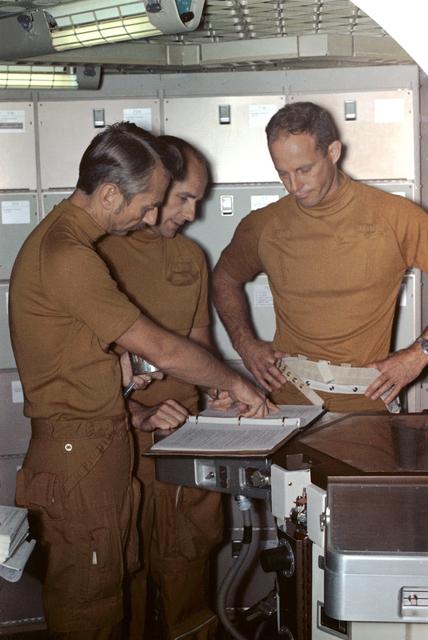
Skylab 3 took the young art of living in space and doubled it. Alan Bean, Owen Garriott and Jack Lousma launched on 28 July 1973 to the station the first crew had saved, and stayed for 59 days — more than twice the record Skylab 2 had just set. Space-sickness and a leaking thruster on their Apollo ferry craft made a tense start, and NASA quietly readied a rescue vehicle that in the end was never needed. Then the crew found their rhythm: tens of thousands of images of the Sun from the station's solar observatory, Earth-resources surveys, and a long series of medical experiments tracking how their bodies adapted across two months of weightlessness. Two spiders carried up as an experiment, Arabella and Anita, learned to spin near-normal webs in orbit. By the time they splashed down on 25 September, Skylab 3 had shown that a crew could work hard and stay healthy through months in space — the middle step from Soyuz 9's weeks to Skylab 4's quarter-year.
- 1973Skylab 3 launchesLaunch
Bean, Garriott and Lousma fly up for a planned two-month stay aboard Skylab.
After a shaky start — space-sickness and a leaking ferry thruster that put a rescue flight on standby — the crew pass Skylab 2's 28-day mark.
- 197359 days — the record doubledMission end
The crew splash down after 59 days, more than doubling the previous record and proving months-long missions were sustainable.
Images

![SKYLAB III - POSTLAUNCH (MISSION CONTROL CENTER [MCC]) - JSC](https://images-assets.nasa.gov/image/s73-31964/s73-31964~thumb.jpg)
Images from open archives · credit shown per image