
Voyager 1
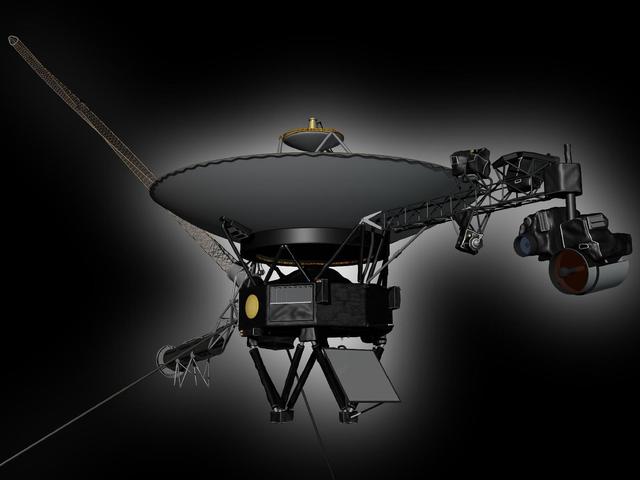
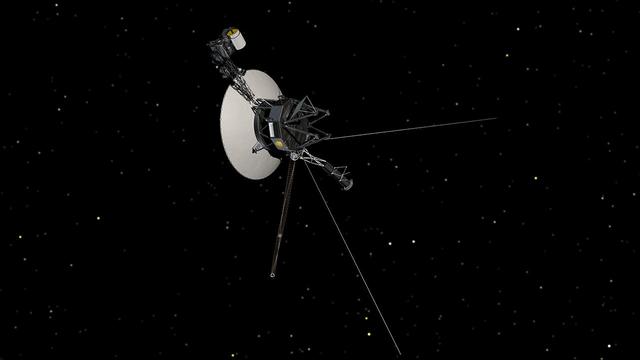
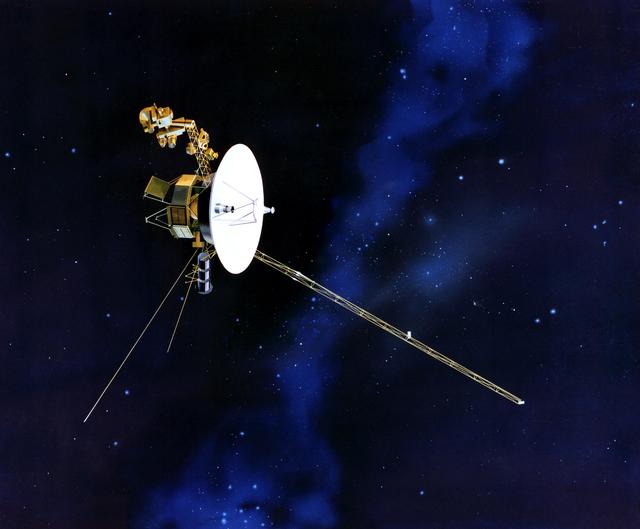
Voyager 1 is a NASA probe launched in 1977 that explored Jupiter and Saturn before continuing outward. In 2012 it became the first human-made object to enter interstellar space, and it remains the most distant spacecraft from Earth.
Key facts
Mission & specifications
Mission
- Operator
- NASA
- Launched
- September 5, 1977
- Status
- Active
- Phase
- Interstellar mission — beyond the heliopause since August 2012
- Purpose
- Jupiter & Saturn flybys; interstellar exploration
Trajectory
- Current speed
- 16.9 km/s
- Computed from the cached state vector
- Distance from the Sun
- 172 AU
- Computed from the cached position
- Distance from Earth
- 173 AU
- Computed from cached positions
Specifications
- Power source
- 3 radioisotope thermoelectric generators (RTGs)
- Dry mass
- 825 kg
- Instruments
- 11
Cost & funding
- Program cost
- $8.65 × 10⁸ USD
- Built by
- NASA Jet Propulsion Laboratory
Mission
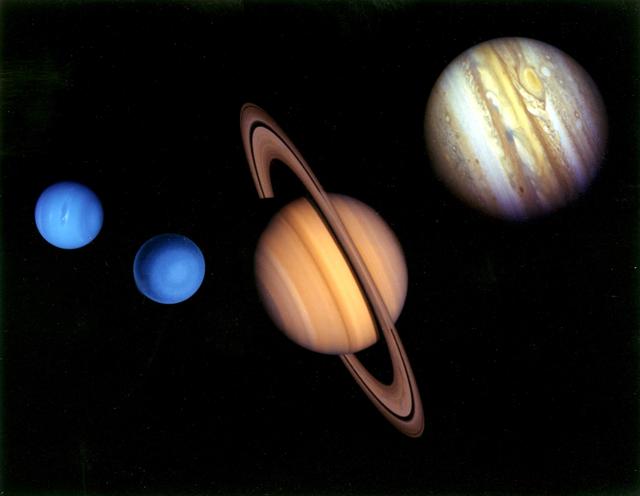
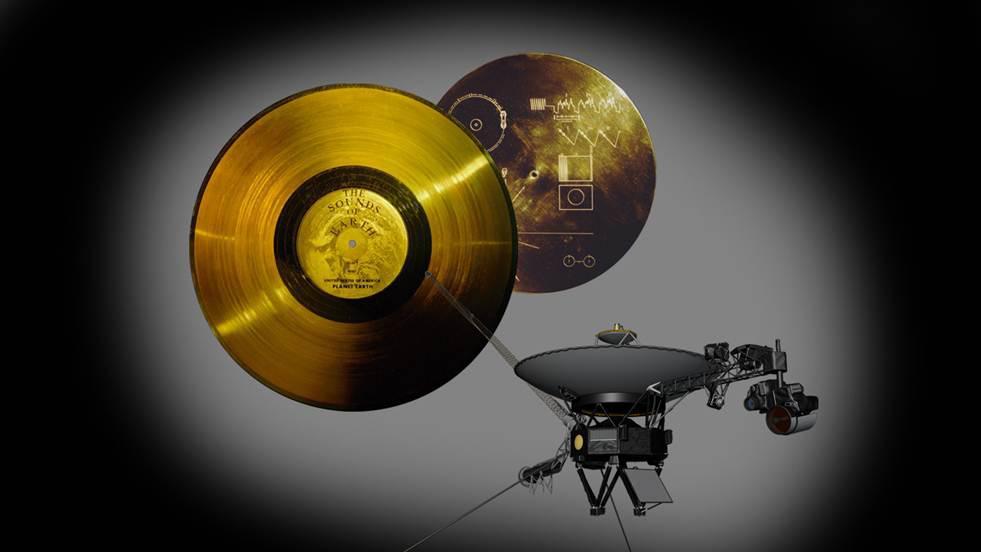
Voyager 1 is the most distant human-made object in existence, and one of the most productive spacecraft ever flown. Launched on 5 September 1977 — just after its twin, but on a faster path — it was sent to tour the giant planets while a rare alignment made the journey possible. At Jupiter, in March 1979, it returned spectacular images of the swirling Great Red Spot and made a startling discovery: the moon Io was dotted with erupting volcanoes, the first active volcanism found beyond Earth. At Saturn, in November 1980, it studied the rings in unprecedented detail and flew close to the giant moon Titan to probe its thick atmosphere. That Titan encounter bent Voyager 1's path up and out of the plane of the planets, ending its planetary tour and sending it climbing toward interstellar space. In 1990, at the urging of Carl Sagan, it turned its camera back to photograph the planets one last time, capturing Earth as a single bright pixel — the 'Pale Blue Dot'. In 1998 it overtook Pioneer 10 to become the most distant spacecraft from the Sun. Then, on 25 August 2012, instruments confirmed that Voyager 1 had crossed the heliopause — the boundary where the Sun's wind gives way to the gas between the stars — becoming the first human-made object to enter interstellar space. It still carries the Golden Record, a message to any who might find it, and continues to transmit faint data from billions of kilometres away as its nuclear power source slowly fades.
- 1977Launch on the faster pathLaunch
Lifts off after Voyager 2 but on a quicker trajectory to Jupiter and Saturn.
Discovers active volcanoes on the moon Io — the first found beyond Earth.
A close pass by Titan bends its path out of the planets' plane, ending the planetary tour.
Turns back to photograph Earth as a single pixel from about 6 billion km away.
- 1998Most distant human-made objectMilestone
Overtakes Pioneer 10 to become the farthest spacecraft from the Sun.
- 2012Enters interstellar spaceMilestone
Crosses the heliopause — the first human-made object to leave the Sun's bubble.
Images


Images from open archives · credit shown per image