
Aurora 7
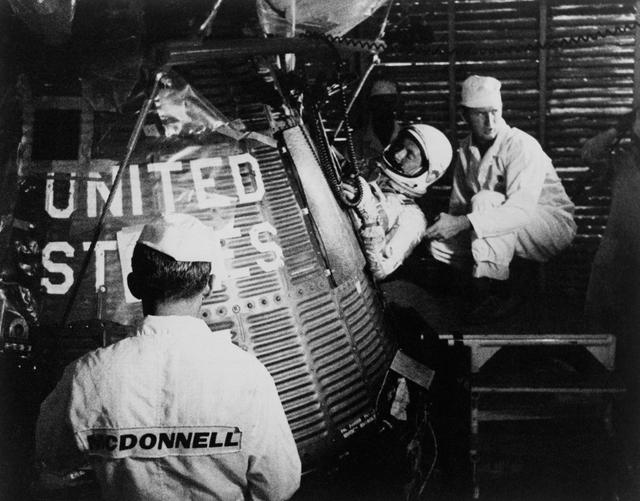
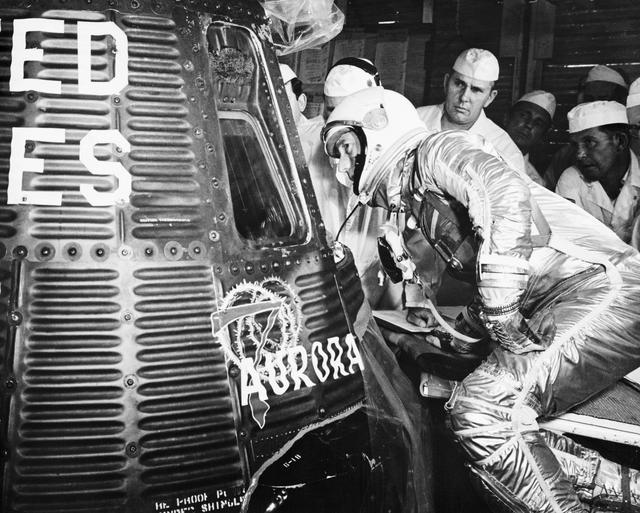
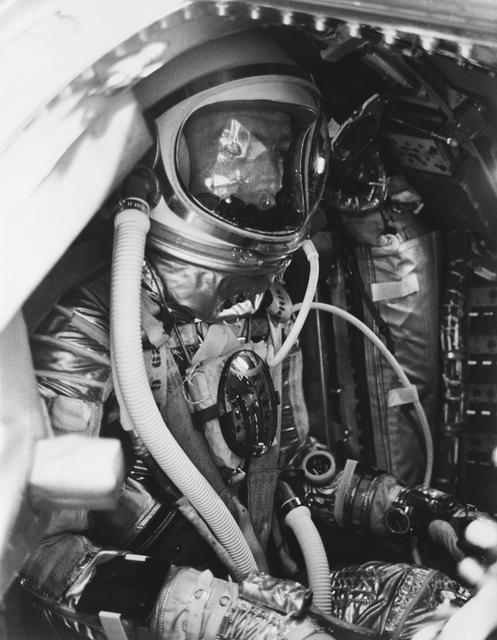
Aurora 7 — Scott Carpenter's three-orbit flight (May 1962), the second American to orbit Earth. A targeting error at retrofire brought him down about 400 km off target, delaying recovery by an anxious hour.
Key facts
Mission & specifications
Mission
- Operator
- NASA
- Launched
- May 24, 1962
- Status
- Completed
Trajectory
- Distance from the Sun
- 0.997 AU
- Computed from the cached position
- Distance from Earth
- 1,794,221 km
- Computed from cached positions
- Distance from Venus
- 0.278 AU
- Computed from cached positions
Mission
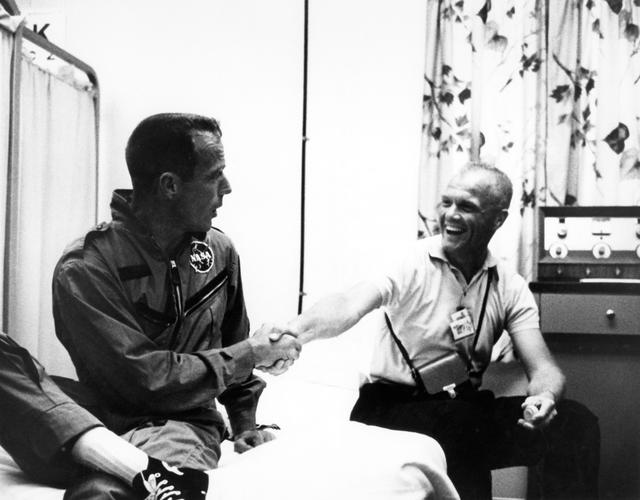
Aurora 7 made Scott Carpenter the second American to orbit the Earth, three months after John Glenn. Launched on 24 May 1962, Carpenter spent nearly five hours and three orbits on a science-and-engineering flight — photographing the horizon, releasing a balloon, and studying the mysterious 'fireflies' Glenn had reported (they turned out to be ice flakes shed by the capsule). Absorbed in his experiments, Carpenter fell behind on the flight plan and used too much attitude fuel, and a malfunction delayed his retrofire. He fired the retrorockets late and slightly misaligned, and Aurora 7 overshot its target by some 400 km, splashing down northeast of Puerto Rico. For an anxious hour no one knew whether he had survived, until aircraft found him floating calmly beside his capsule. He came home safe, but the overshoot — and friction with mission control — meant Carpenter never flew in space again.
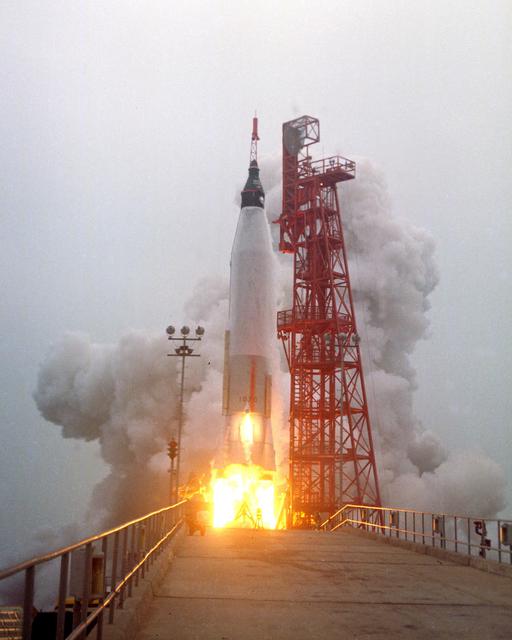
- 1962Aurora 7 launchesLaunch
Scott Carpenter becomes the second American to orbit — a three-orbit science flight.
- 1962A late, off-target retrofireMilestone
Behind on the flight plan and low on fuel, Carpenter fires the retros late; Aurora 7 overshoots by ~400 km.
- 1962Splashdown, found after an anxious hourMission end
Recovery aircraft find Carpenter floating calmly beside his capsule near Puerto Rico.
Images

Images from open archives · credit shown per image