
Apollo 17
Apollo 17 — the last crewed mission to the Moon (December 1972); landed at Taurus–Littrow for the longest lunar stay.
Key facts
Mission & specifications
Mission
- Operator
- NASA
- Launched
- December 7, 1972
- Status
- Completed
Trajectory
- Distance from the Sun
- 1.01 AU
- Computed from the cached position
- Distance from Earth
- 0.379 AU
- Computed from cached positions
- Distance from Venus
- 0.383 AU
- Computed from cached positions
Mission
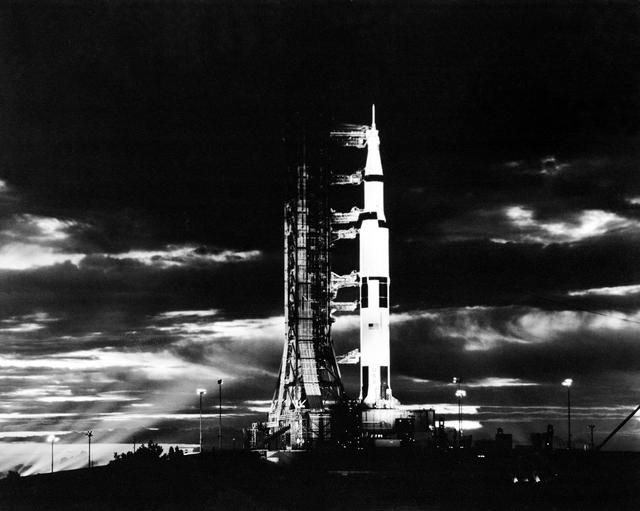
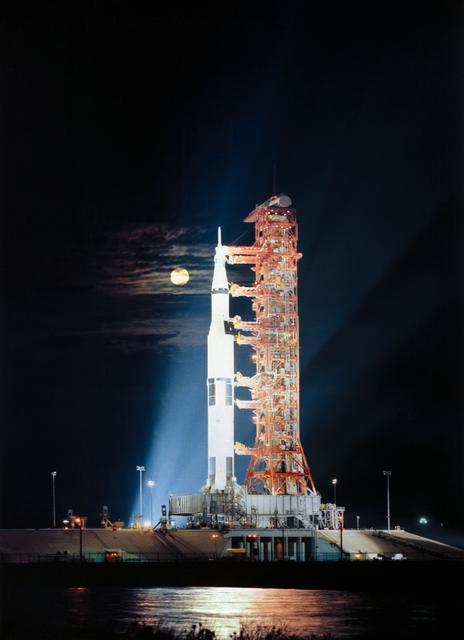
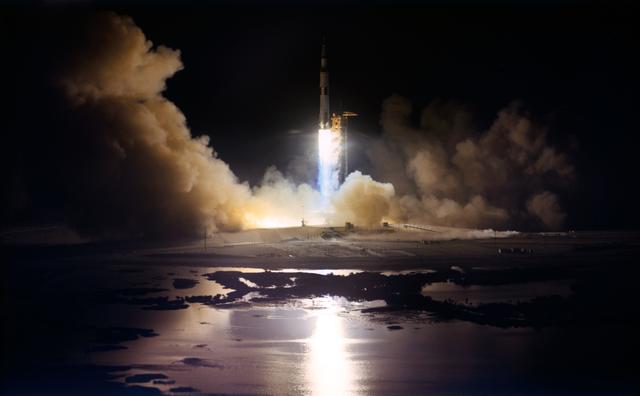
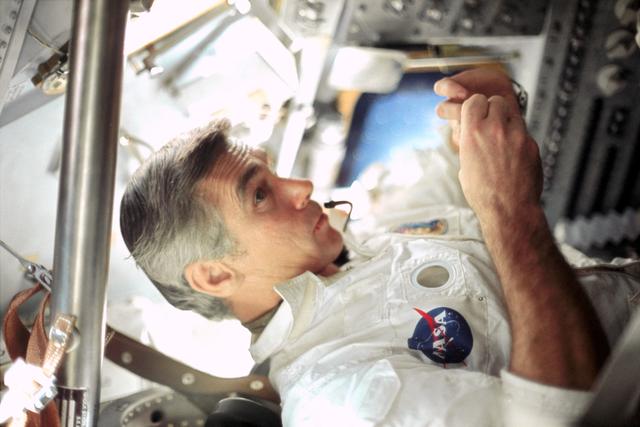
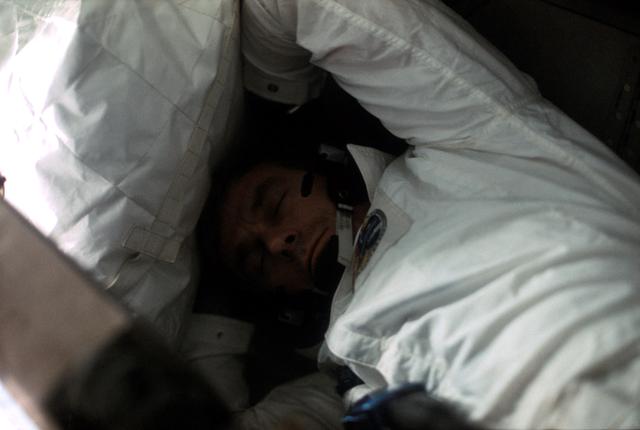
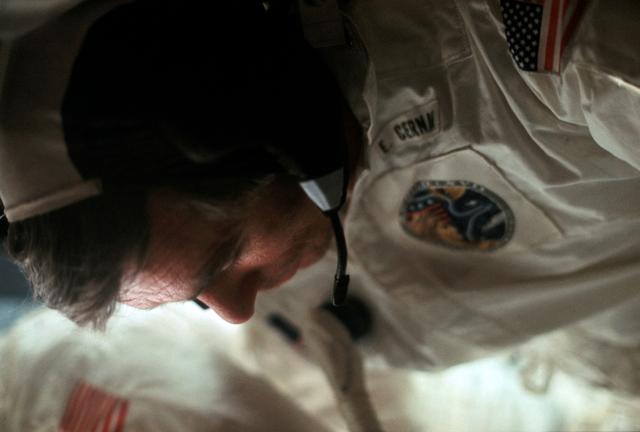
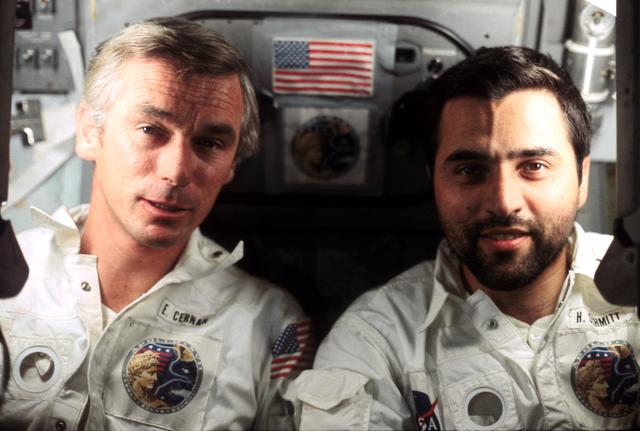
Apollo 17 was the last time human beings walked on the Moon. Launched in the first night-time liftoff of a Saturn V, on 7 December 1972, it carried commander Eugene Cernan, command-module pilot Ronald Evans, and Harrison Schmitt — a professional geologist, and the only trained scientist to reach the lunar surface during Apollo. Cernan and Schmitt landed in the Taurus–Littrow valley, a site chosen for its mix of ancient highlands and what looked like younger volcanic material. Over three days they made three excursions in the electric lunar rover, ranging kilometres from the lander and collecting 111 kilograms of samples — the largest haul of the programme. Their most celebrated find came at Shorty crater, where Schmitt spotted bright orange soil: tiny beads of volcanic glass, sprayed out in a fire-fountain eruption more than three billion years ago. The mission set records for the longest lunar stay and the longest total time spent walking and driving on the surface. As Cernan climbed the ladder for the final time on 14 December, he left the last human footprints on the Moon and spoke of returning 'with peace and hope for all mankind'. More than half a century later, no one has gone back.
- 1972Night launch of the final ApolloLaunch
The only night-time Saturn V liftoff carries Cernan, Evans and the geologist Schmitt.
Apollo 17 enters orbit around the Moon ahead of the descent to Taurus–Littrow.
Cernan and Schmitt set down in a deep valley of highlands and suspected volcanic terrain.
Across three rover excursions the pair gather 111 kg of samples; Schmitt finds orange volcanic glass.
Cernan climbs the ladder for the final time; no human has returned since.
Apollo 17 closes the crewed lunar programme.
Images
Images from open archives · credit shown per image