
Gemini 6A
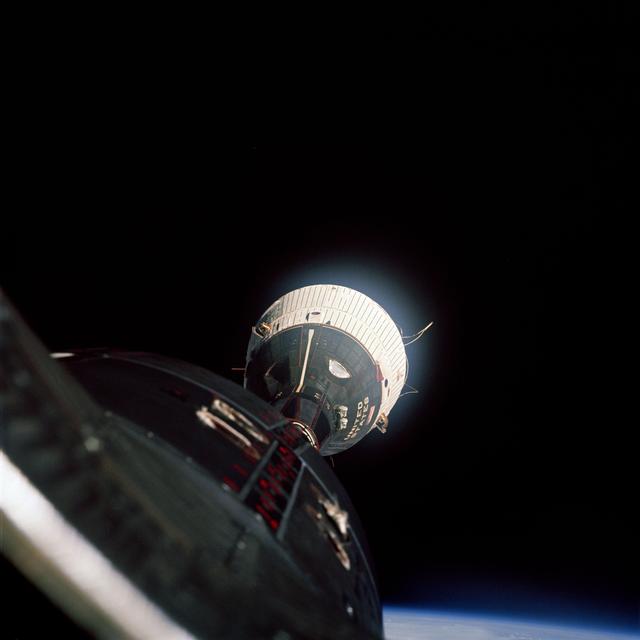
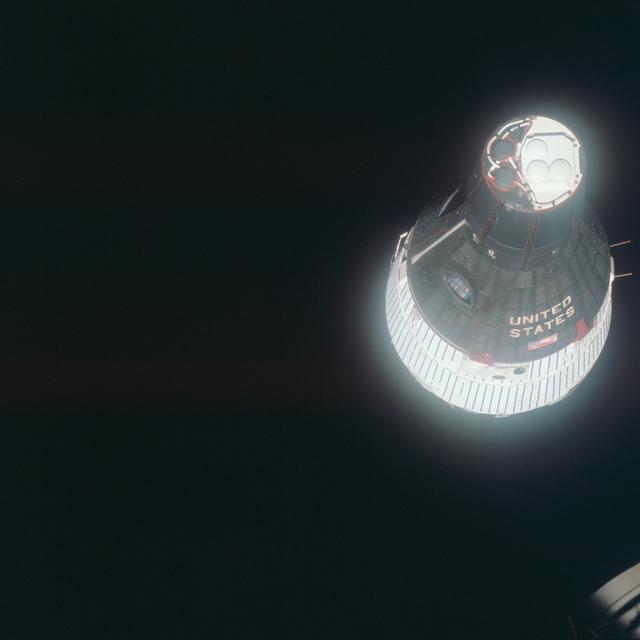
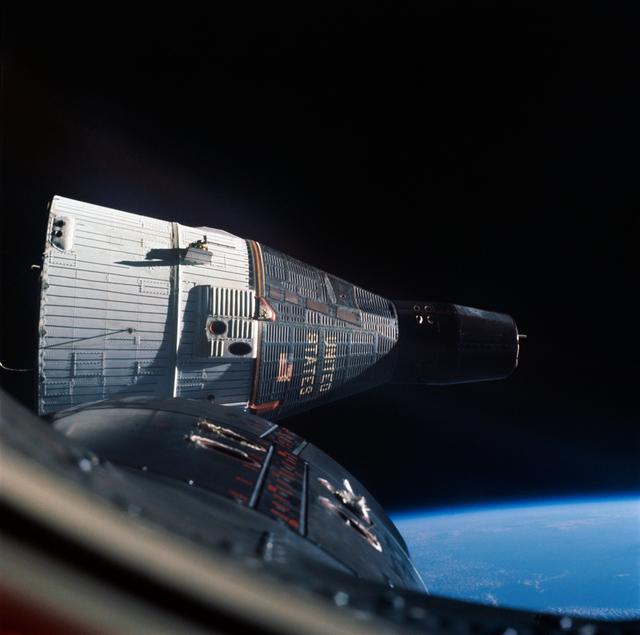
Gemini 6A — the first rendezvous of two crewed spacecraft (December 1965). Wally Schirra and Tom Stafford flew to within a foot of Gemini 7, proving spacecraft could find and hold station on each other.
Key facts
Mission & specifications
Mission
- Operator
- NASA
- Launched
- December 15, 1965
- Status
- Completed
Trajectory
- Distance from the Sun
- 0.997 AU
- Computed from the cached position
- Distance from Earth
- 1,972,814 km
- Computed from cached positions
- Distance from Venus
- 0.278 AU
- Computed from cached positions
Mission
Gemini 6A achieved the manoeuvre on which the whole Moon programme hinged: bringing two spacecraft together in orbit. Its original target, an uncrewed Agena, blew up on launch, so NASA improvised — it would rendezvous with Gemini 7, already in orbit on its two-week endurance flight. After a launch-pad engine shutdown that Wally Schirra coolly rode out without ejecting, he and Tom Stafford flew up on 15 December 1965 and, over hours of careful thrusting, closed to within a foot of Gemini 7 and held formation. It was the first true space rendezvous — proof that a lunar craft could find and join another in orbit, the technique every Apollo mission would use around the Moon. Before re-entry the crew reported a 'satellite' in a polar orbit, then played 'Jingle Bells' on a harmonica and bells they had smuggled aboard.
- 1965Pad abort — and a cool headMilestone
The engines ignite and shut down on the pad; Schirra holds his nerve and does not eject, saving the mission.
- 1965Gemini 6A launchesLaunch
Schirra and Stafford fly up to chase Gemini 7, already in orbit.
Gemini 6A closes to within a foot of Gemini 7 and holds formation — the manoeuvre every Apollo flight would need.
- 1965SplashdownMission end
Home after 16 orbits, recovered by USS Wasp.
Images

Images from open archives · credit shown per image