
Gemini 11
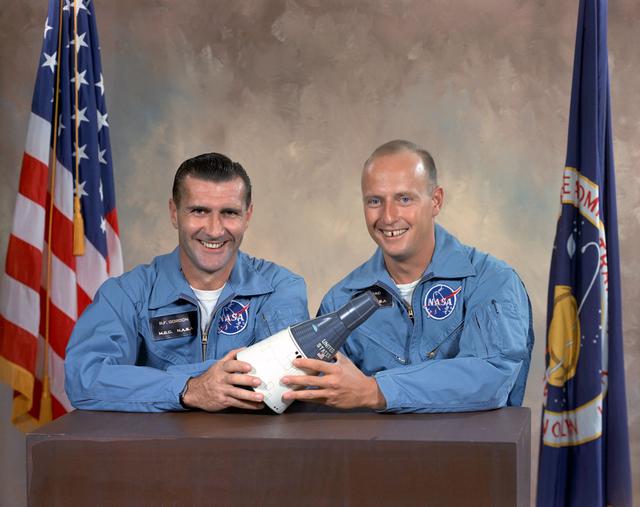
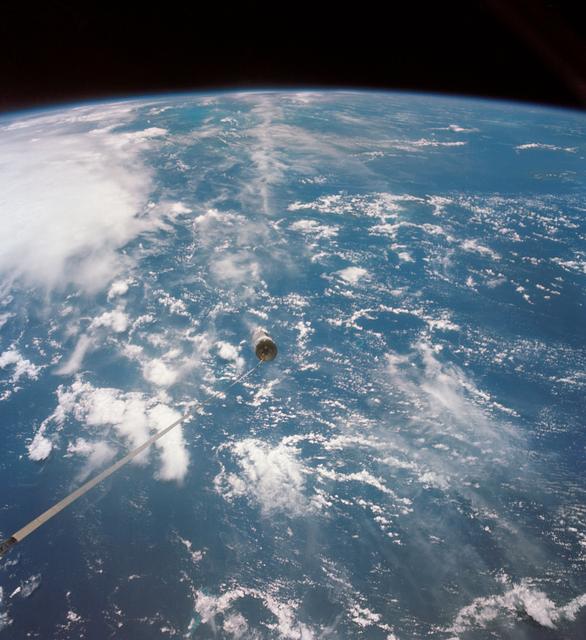
Gemini 11 — Pete Conrad and Richard Gordon (September 1966) rendezvoused with their Agena on the very first orbit, rode its engine to a record 1,374 km, and spun a tether for the first artificial-gravity test.
Key facts
Mission & specifications
Mission
- Operator
- NASA
- Launched
- September 12, 1966
- Status
- Completed
Trajectory
- Distance from the Sun
- 0.998 AU
- Computed from the cached position
- Distance from Earth
- 617,746 km
- Computed from cached positions
- Distance from Venus
- 0.289 AU
- Computed from cached positions
Mission
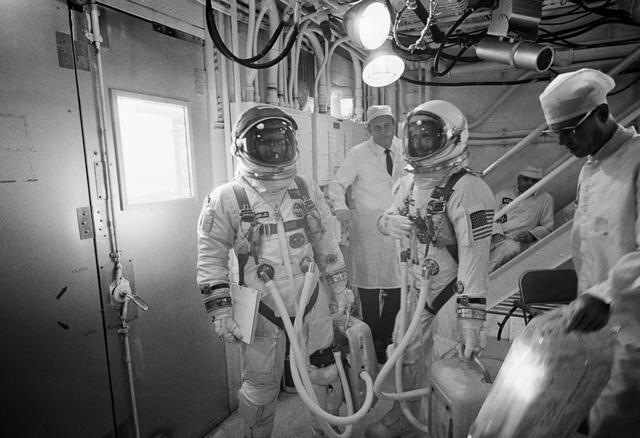
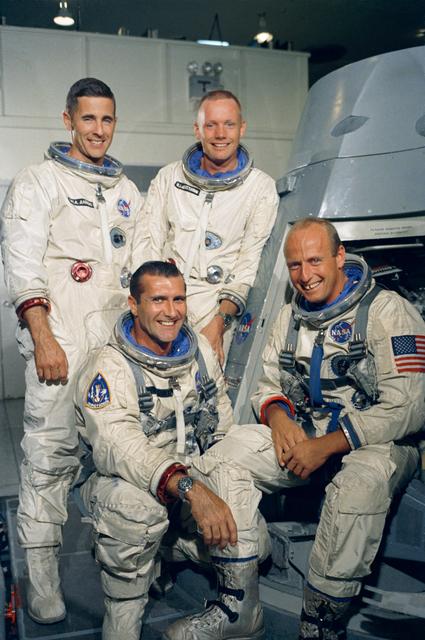
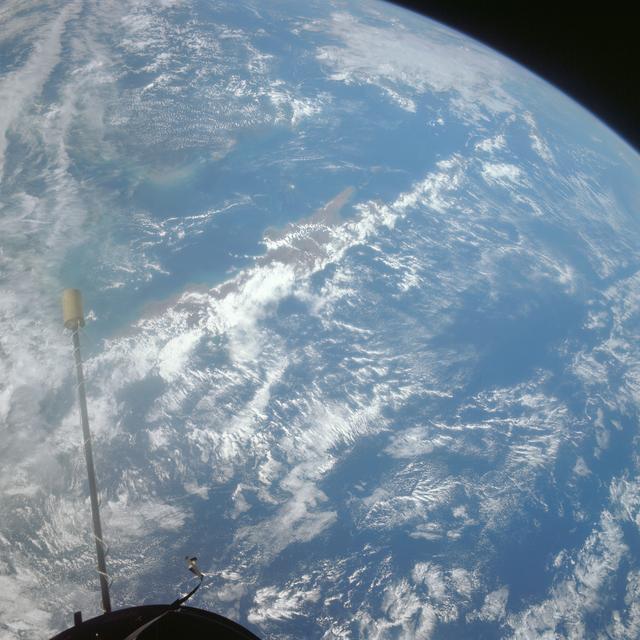
Gemini 11 pushed the program's records to their limits. Pete Conrad and Richard Gordon launched on 12 September 1966 and pulled off a direct-ascent rendezvous — catching their Agena target on the very first orbit, the fast approach a lunar mission would need. Then they lit the Agena's engine and rode it to an apogee of 1,374 km, higher than any crew had flown before and would fly again only when Apollo left Earth orbit; from that height they photographed the whole curve of the planet. Gordon's spacewalk, like Cernan's before him, proved gruelling. To finish, the crew connected the two craft with a long tether and set them slowly rotating — the first test of artificial gravity in space. Conrad would go on to command Apollo 12 and walk on the Moon.
- 1966Gemini 11 launchesLaunch
Conrad and Gordon aim to catch their Agena on the very first orbit.
A direct-ascent rendezvous with the Agena on orbit one — the fast approach a lunar mission would use.
- 1966A record 1,374 km, then a tether spinMilestone
The Agena's engine lifts them higher than any crew before Apollo; later they spin a tether for the first artificial-gravity test.
- 1966SplashdownMission end
Home after 44 orbits, recovered by USS Guam.
Images

Images from open archives · credit shown per image