
Gemini 10
Gemini 10 — John Young and Michael Collins (July 1966) made the first double rendezvous and fired a docked Agena's engine to climb higher than any crew had flown.
Key facts
Mission & specifications
Mission
- Operator
- NASA
- Launched
- July 18, 1966
- Status
- Completed
Trajectory
- Distance from the Sun
- 0.998 AU
- Computed from the cached position
- Distance from Earth
- 869,051 km
- Computed from cached positions
- Distance from Venus
- 0.288 AU
- Computed from cached positions
Mission
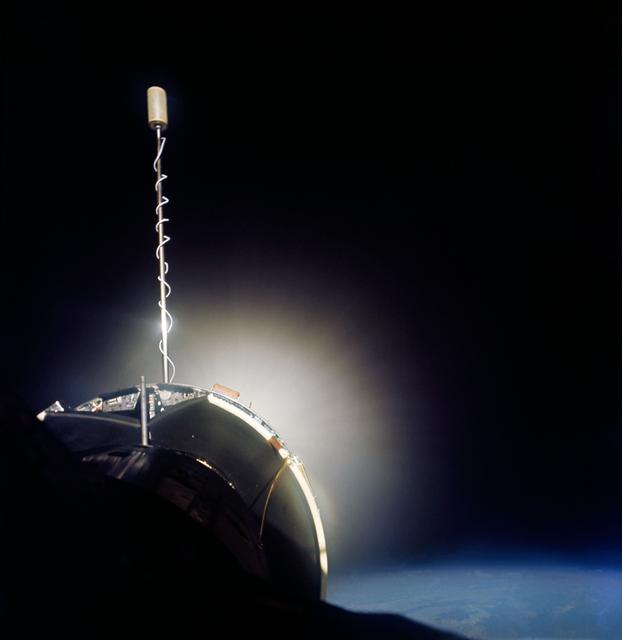
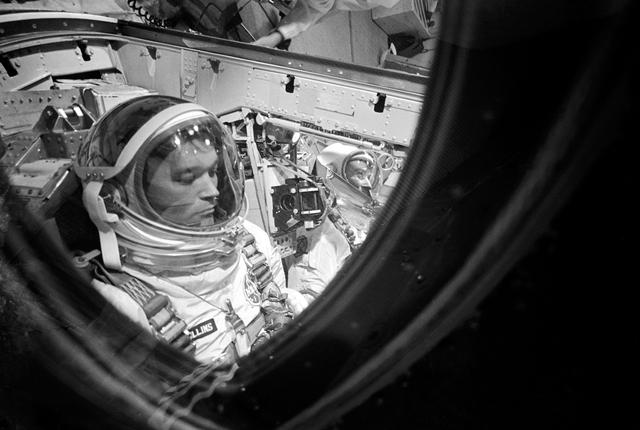
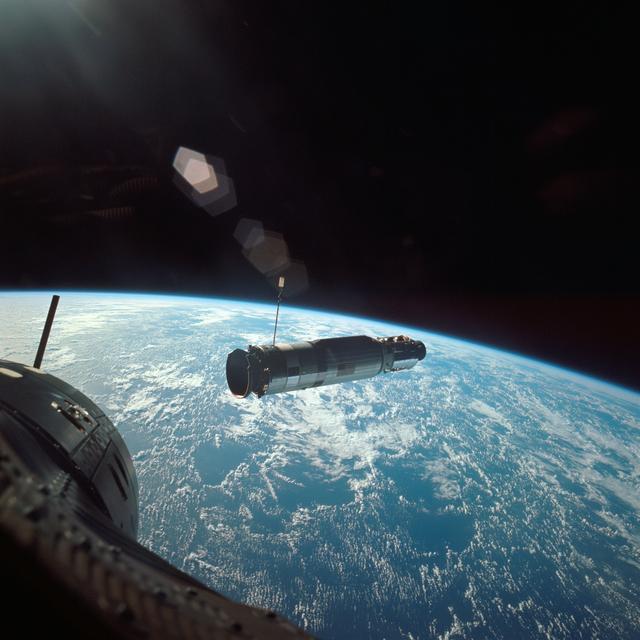
Gemini 10 turned the Agena target from a docking partner into a tool. John Young and Michael Collins launched on 18 July 1966, docked with their own Agena, and then did something new: they fired the Agena's powerful engine while still attached, using it as a stage to boost themselves to a record altitude and chase down a second, dormant Agena left in orbit by Gemini 8. It was the first double rendezvous, and the first time a crew used a target vehicle's propulsion to travel. Collins then spacewalked over to the drifting Agena to retrieve a micrometeorite-collection package — a rare in-space recovery from another object. Both men went on to Apollo: Collins would orbit the Moon alone aboard Apollo 11 while Armstrong and Aldrin walked below, and Young would walk on it himself on Apollo 16.
- 1966Gemini 10 launchesLaunch
Young and Collins fly to dock with their Agena target.
Docked to the Agena, the crew fire its engine to climb higher and chase a second, dormant Agena — the first double rendezvous.
- 1966Spacewalk to another spacecraftMilestone
Collins spacewalks over to the drifting Gemini 8 Agena to retrieve its micrometeorite package.
- 1966SplashdownMission end
Down after 43 orbits, recovered by USS Guadalcanal.
Images

Images from open archives · credit shown per image