
Liberty Bell 7
Liberty Bell 7 — Gus Grissom's 15-minute suborbital flight (July 1961), the second US crewed spaceflight. After splashdown the hatch blew unexpectedly and the capsule sank; Grissom was pulled from the sea safely.
Key facts
Mission & specifications
Mission
- Operator
- NASA
- Launched
- July 21, 1961
- Status
- Completed
Trajectory
- Distance from the Sun
- 0.998 AU
- Computed from the cached position
- Distance from Earth
- 1,830,216 km
- Computed from cached positions
- Distance from Venus
- 0.286 AU
- Computed from cached positions
Mission
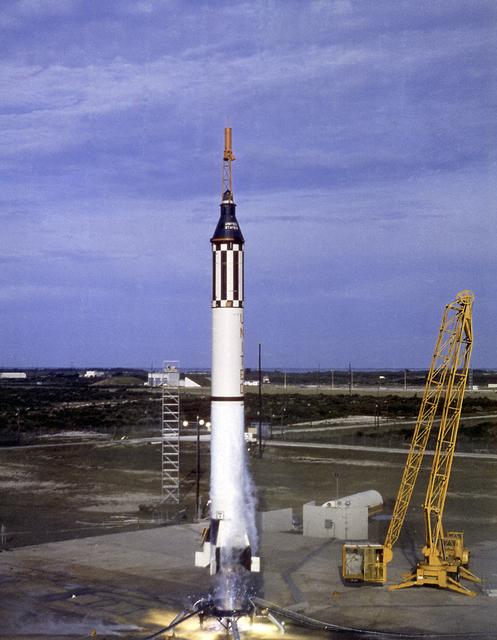
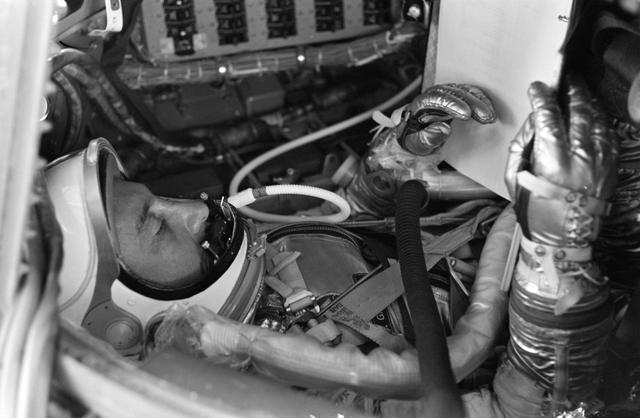
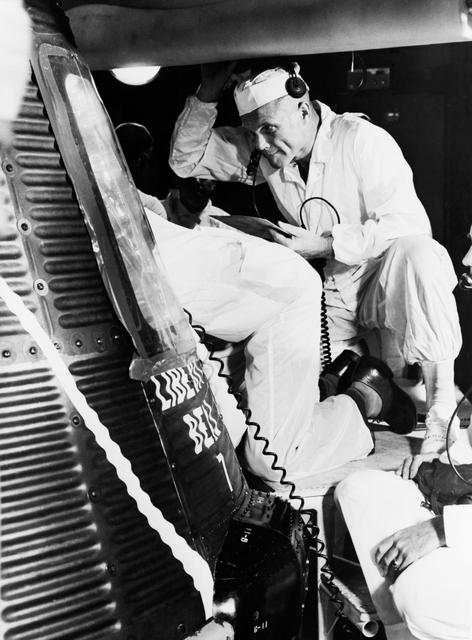
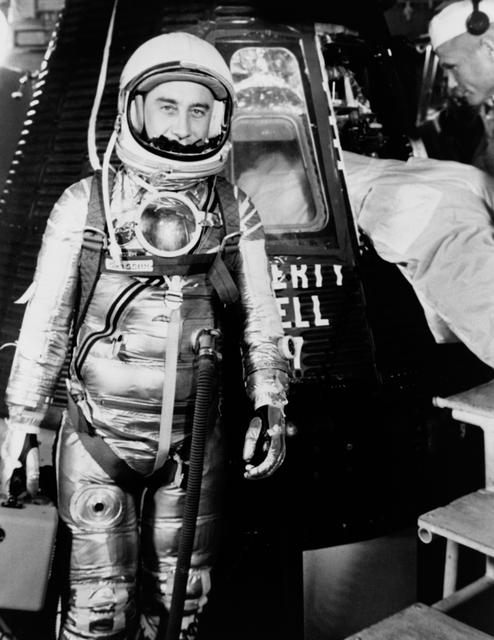
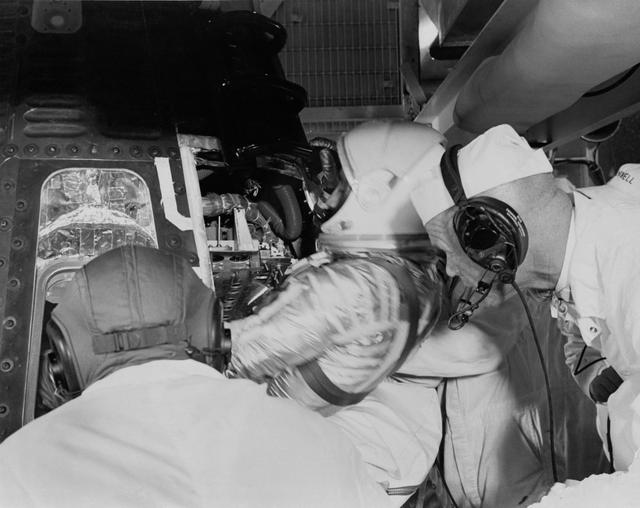
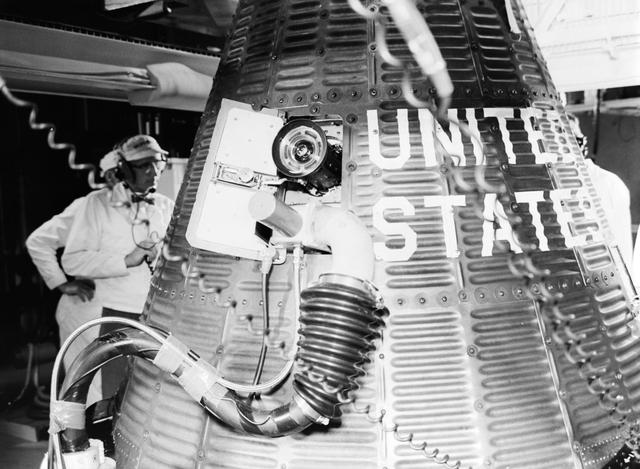
Liberty Bell 7 was the second American in space — and the flight that nearly cost Gus Grissom his life on the way home. On 21 July 1961 Grissom flew a 15-minute suborbital arc, much like Alan Shepard's before him, testing a new capsule with a large window and an explosive side hatch. The flight itself went well; the trouble came after splashdown. As Grissom waited for the recovery helicopter, the hatch's explosive bolts fired without warning. Seawater poured in, and while the helicopter struggled with the flooding, sinking capsule, Grissom — his spacesuit filling with water through an open valve — swam for his life until a second helicopter pulled him out. Liberty Bell 7 sank to the Atlantic floor, where it stayed for 38 years until it was raised in 1999. Whether Grissom bumped the hatch or it failed on its own was never settled; the astronaut always insisted he had not touched it, and later capsules changed the design.
- 1961Liberty Bell 7 launchesLaunch
Gus Grissom flies the second US crewed mission — a 15-minute suborbital arc.
After splashdown the explosive hatch fires without warning; the capsule floods and sinks, and Grissom is pulled from the sea.
- 1961RecoveryMission end
Grissom is safe; Liberty Bell 7 stays on the Atlantic floor until it is raised in 1999.
Images

Images from open archives · credit shown per image