
67P/Churyumov-Gerasimenko
Comet· orbits the Sun
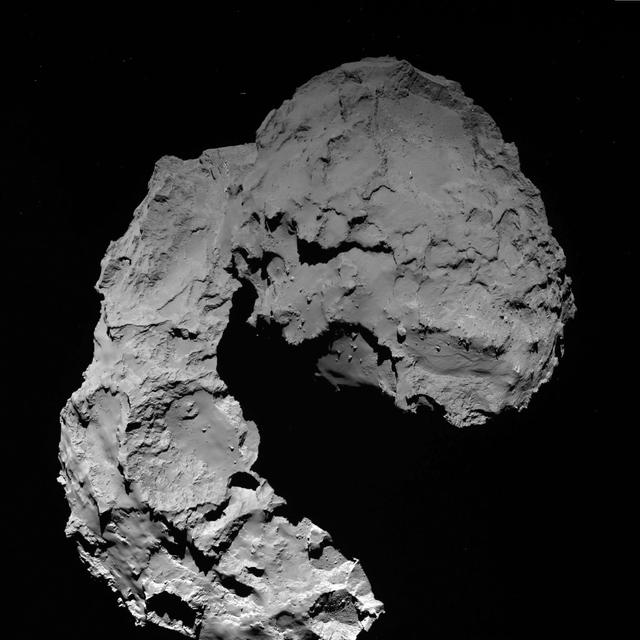
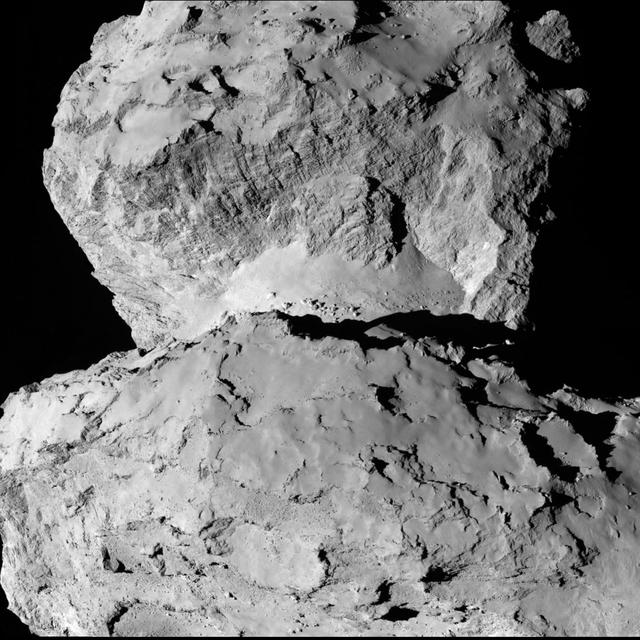
67P/Churyumov–Gerasimenko is a two-lobed, 'rubber-duck'-shaped comet studied in unprecedented detail by ESA's Rosetta orbiter and its Philae lander in 2014–2016.
Open in 3D viewSee 67P/Churyumov-Gerasimenko in the live, interactive 3D map
Key facts
Perihelion
1.21 AU
Aphelion
5.71 AU
Orbital period
6.43 years
Eccentricity
0.6495
Science
Physical
- Nucleus
- ≈ 4.3 × 4.1 km (two lobes)
- Composition
- A dark, porous nucleus of water, carbon-monoxide and carbon-dioxide ices mixed with dust and organic-rich material — extremely low density.
Orbital
- Semi-major axis
- 3.46 AU
- From catalogued orbital elements (MPC)
- Eccentricity
- 0.6495
- From catalogued orbital elements (MPC)
- Inclination
- 3.87 °
- From catalogued orbital elements (MPC)
- Orbital period
- 6.43 years
- From catalogued orbital elements (MPC)
- Perihelion
- 1.21 AU
- Computed from the orbital elements
- Aphelion
- 5.71 AU
- Computed from the orbital elements
- Mean orbital velocity
- 16 km/s
- Computed from the orbital elements
Activity
- Status
- Currently inactive (q = 1.21 AU, next perihelion ≈ 2028)
- Becomes active within
- 5 AU of the Sun
Radiation & temperature
- Insolation
- 0.0836 S⊕ · 8% of the sunlight Earth receives
- Computed from the distance to the Sun (inverse-square; Earth's sunlight = 1), before any atmosphere.
- Geometric albedo
- 0.06
- Nucleus geometric albedo ≈ 0.06 — a very dark surface (Rosetta).
- Equilibrium temperature
- 147 K (-126 °C)
- Computed from albedo + distance from the Sun (airless black body); uses the geometric albedo as an estimate
Discovery & history
- Discovered
- September 20, 1969
- By
- Klim Churyumov and Svetlana Gerasimenko
- Method
- Photographic plates
- Name
- Named after its two discoverers at the Alma-Ata (Almaty) observatory, Kazakhstan.
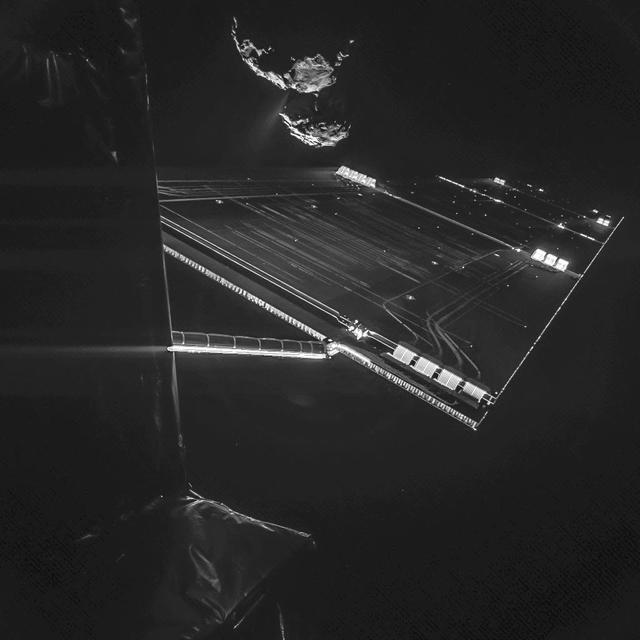
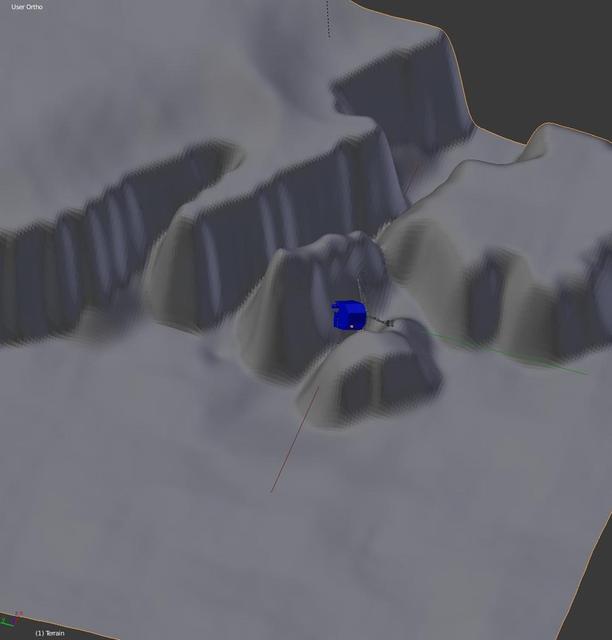
67P was discovered in 1969 by Klim Churyumov while examining a photographic plate of another comet taken by Svetlana Gerasimenko at Alma-Ata (now Almaty), Kazakhstan. In 2014 it became the first comet ever orbited and landed upon: ESA's Rosetta spacecraft arrived after a ten-year chase and released the Philae lander onto its surface, revealing a dark, two-lobed 'rubber-duck' nucleus of ice and dust.
First spacecraft to orbit a comet, escorting 67P for over two years.
- 2014PhilaeLander
First soft landing on a comet nucleus.
Images


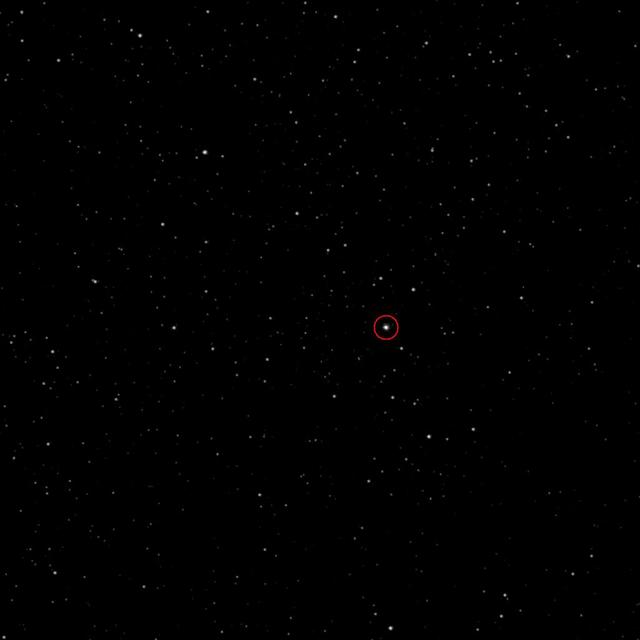
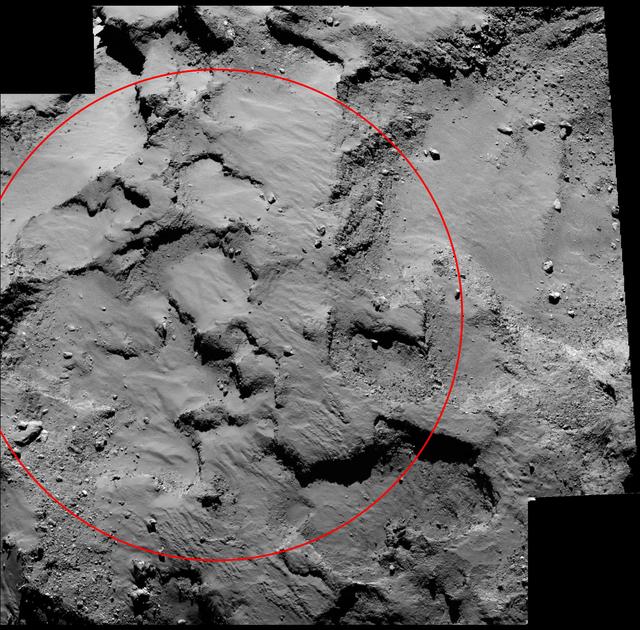
Images from open archives · credit shown per image