
2001 Mars Odyssey
2001 Mars Odyssey — NASA's longest-running Mars mission, mapping the planet's minerals and near-surface ice from orbit since 2001 and serving as a data relay for the rovers on the surface.
Key facts
Mission & specifications
Mission
- Operator
- NASA / JPL
- Launched
- April 7, 2001
- Status
- Active
Trajectory
- Speed rel. Mars
- 3.33 km/s
- Computed from the cached state vector, relative to Mars
- Distance from the Sun
- 1.58 AU
- Computed from the cached position
- Distance from Earth
- 1.53 AU
- Computed from cached positions
- Distance from Mars
- 1,138,353 km
- Computed from cached positions
Mission
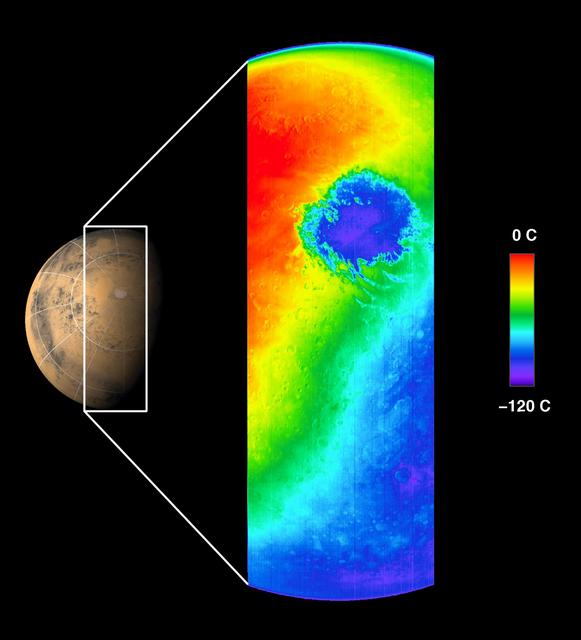
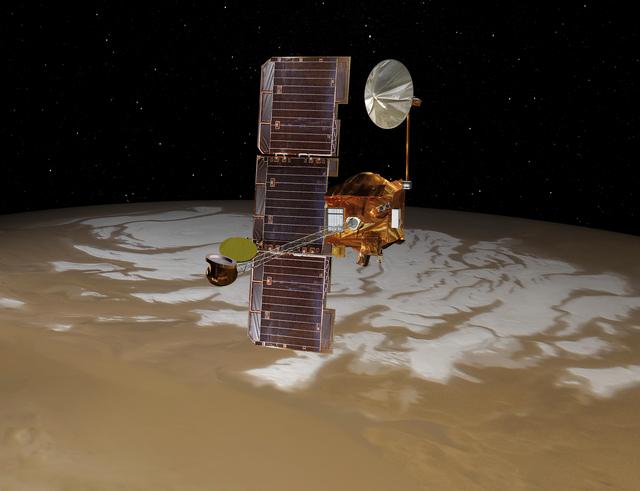
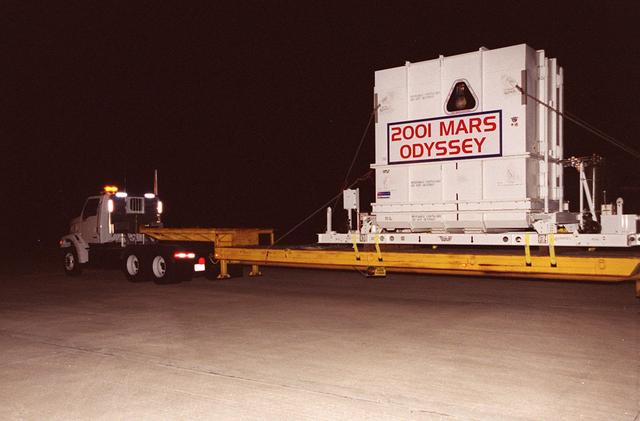
2001 Mars Odyssey holds a quiet record: it is the longest-operating spacecraft ever to circle another planet. Named with a nod to Arthur C. Clarke, it reached Mars in October 2001 and has been working there ever since — for more than two decades. Its early discovery reshaped Mars exploration. Odyssey's instruments detected vast amounts of hydrogen just below the surface, the signature of enormous reserves of water ice locked in the soil, especially near the poles. That finding — water, the prerequisite for life and for human survival — helped steer a generation of later missions toward the question of whether Mars was ever habitable. Odyssey also mapped the planet's minerals in infrared, charting where ancient water once altered the rocks. Its most indispensable role, though, is humbler: it is a relay. Much of the data sent home by NASA's rovers — Spirit, Opportunity, Curiosity and Perseverance — is radioed up to Odyssey as it passes overhead and then forwarded to Earth, making the veteran orbiter a backbone of the Mars communications network. Decades after launch, carefully husbanding its last reserves of fuel, Odyssey keeps watch over the red planet — a patient survivor that turned a primary mission of a few years into an era of its own.
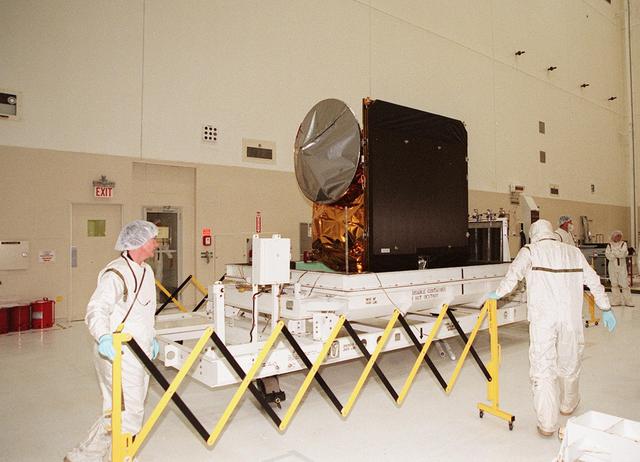
- 2001Launch toward MarsLaunch
NASA's long-lived orbiter departs for the red planet.
Odyssey enters orbit to begin what becomes a record-breaking mission.
Detects vast hydrogen deposits — buried water ice — across the high latitudes.
Becomes the data relay that carries most of the surface rovers' findings home.
Images

Images from open archives · credit shown per image