
Voyager 2
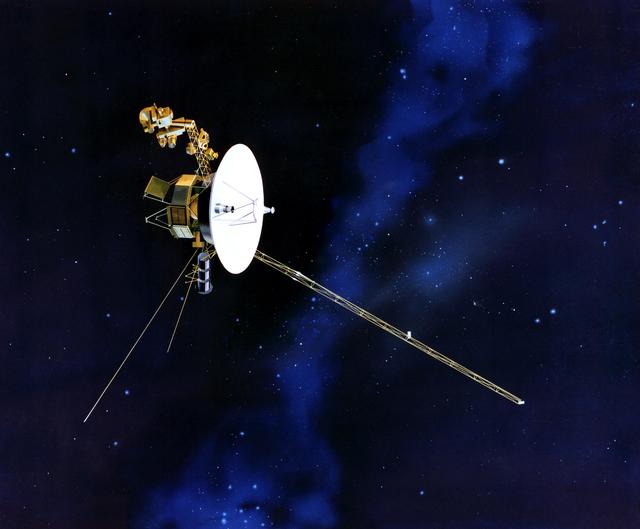
Voyager 2 is the only spacecraft to have visited all four giant planets — Jupiter, Saturn, Uranus and Neptune. Launched in 1977, it crossed into interstellar space in 2018.
Key facts
Mission & specifications
Mission
- Operator
- NASA
- Launched
- August 20, 1977
- Status
- Active
- Phase
- Interstellar mission — beyond the heliopause since November 2018
- Purpose
- Grand Tour of the four giant planets; interstellar exploration
Trajectory
- Current speed
- 15.3 km/s
- Computed from the cached state vector
- Distance from the Sun
- 144 AU
- Computed from the cached position
- Distance from Earth
- 144 AU
- Computed from cached positions
Specifications
- Power source
- 3 radioisotope thermoelectric generators (RTGs)
- Dry mass
- 825 kg
- Instruments
- 11
Cost & funding
- Program cost
- $8.65 × 10⁸ USD
- Built by
- NASA Jet Propulsion Laboratory
Mission
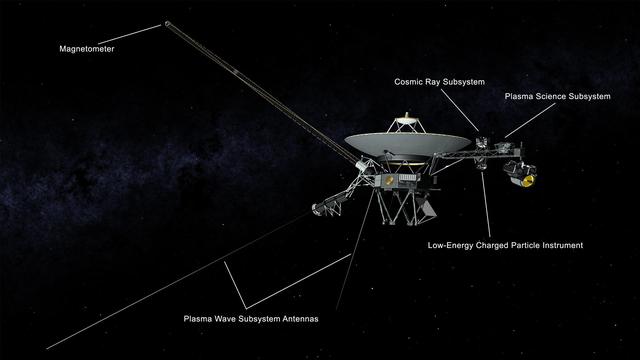
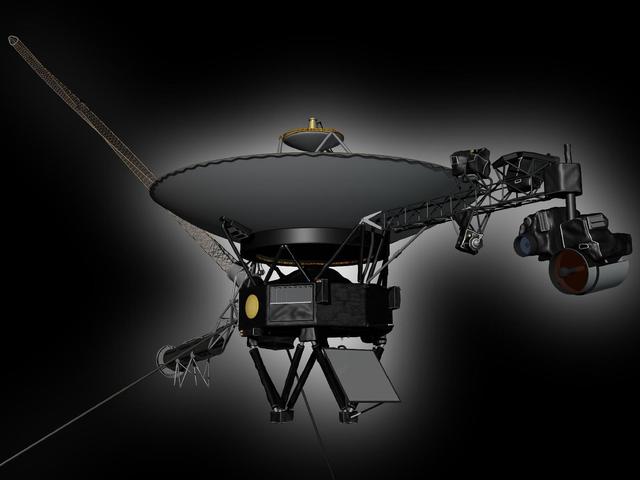
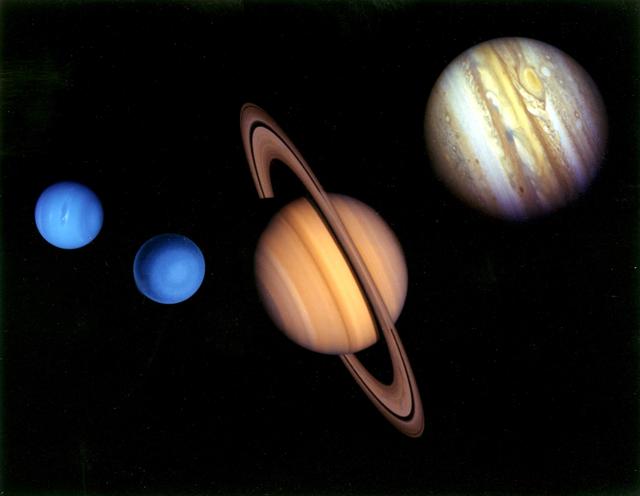
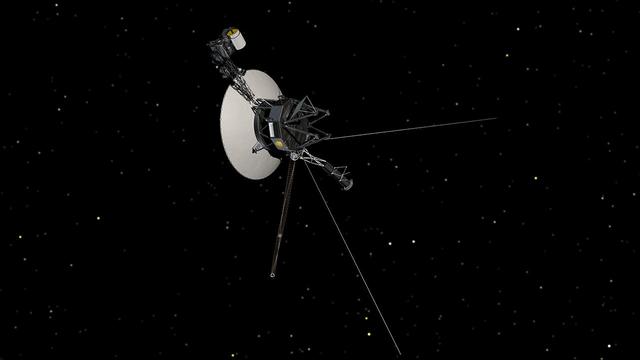
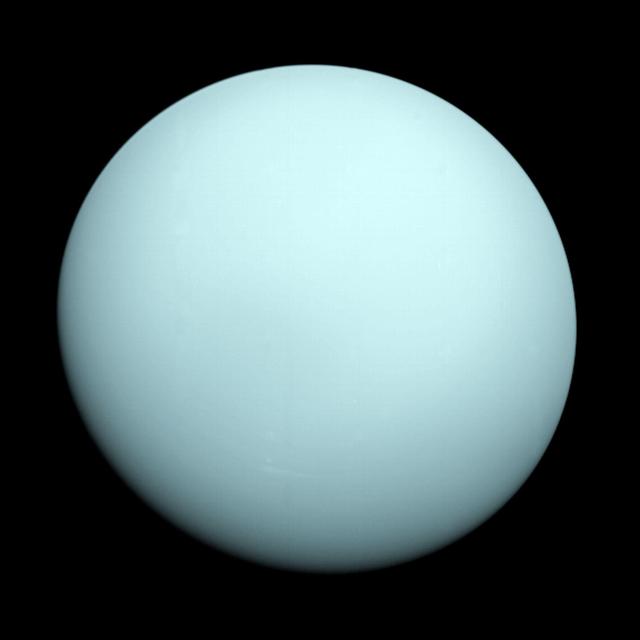
Voyager 2 is the only spacecraft to have visited all four giant planets, and it completed one of the greatest journeys of exploration in history. Launched on 20 August 1977, two weeks before Voyager 1, it followed a slower, grander trajectory that exploited a rare planetary alignment occurring roughly once every 175 years. It reached Jupiter in July 1979 and Saturn in August 1981, returning a wealth of detail on their storms, rings and moons. Then it went where no spacecraft had gone before — or has gone since. In January 1986 Voyager 2 swept past Uranus, discovering ten new moons and a bizarrely tilted magnetic field on a planet that rolls on its side. In August 1989 it reached Neptune, the outermost giant, revealing a vivid blue world with the fastest winds in the Solar System and a 'Great Dark Spot', and finding active geysers of nitrogen erupting from its frigid moon Triton. These remain humanity's only close-up visits to the ice giants, and the images Voyager 2 sent back are still the best we have. Like its twin, it carries a Golden Record of sounds and images from Earth. Having completed its 'Grand Tour', Voyager 2 continued outward, and on 5 November 2018 it became the second spacecraft to cross into interstellar space, giving scientists a second reading of the boundary of the Sun's domain. More than four decades after launch it is still operating, its plutonium power supply gradually waning, sending data from beyond the planets.
- 1977Launch on the Grand TourLaunch
Sets out on a trajectory that exploits a giant-planet alignment seen once in 175 years.
Studies the Great Red Spot and the Galilean moons in detail.
Images the rings and moons before continuing toward the ice giants.
Discovers ten new moons and a strangely tilted magnetic field on the sideways planet.
Reveals supersonic winds, a Great Dark Spot, and nitrogen geysers on the moon Triton.
- 2018Enters interstellar spaceMilestone
Becomes the second spacecraft to cross the heliopause, decades after launch.
Images


Images from open archives · credit shown per image