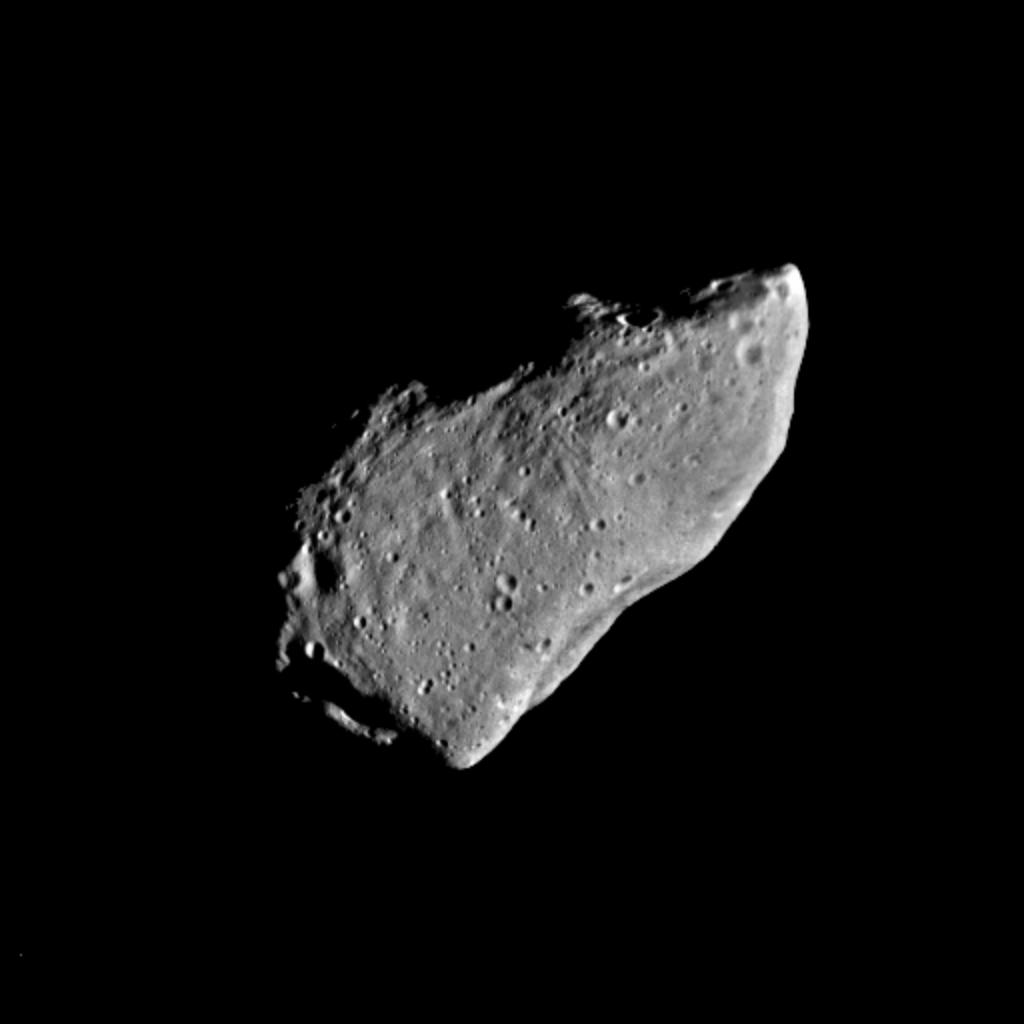
(951) Gaspra
Asteroid· orbits the Sun
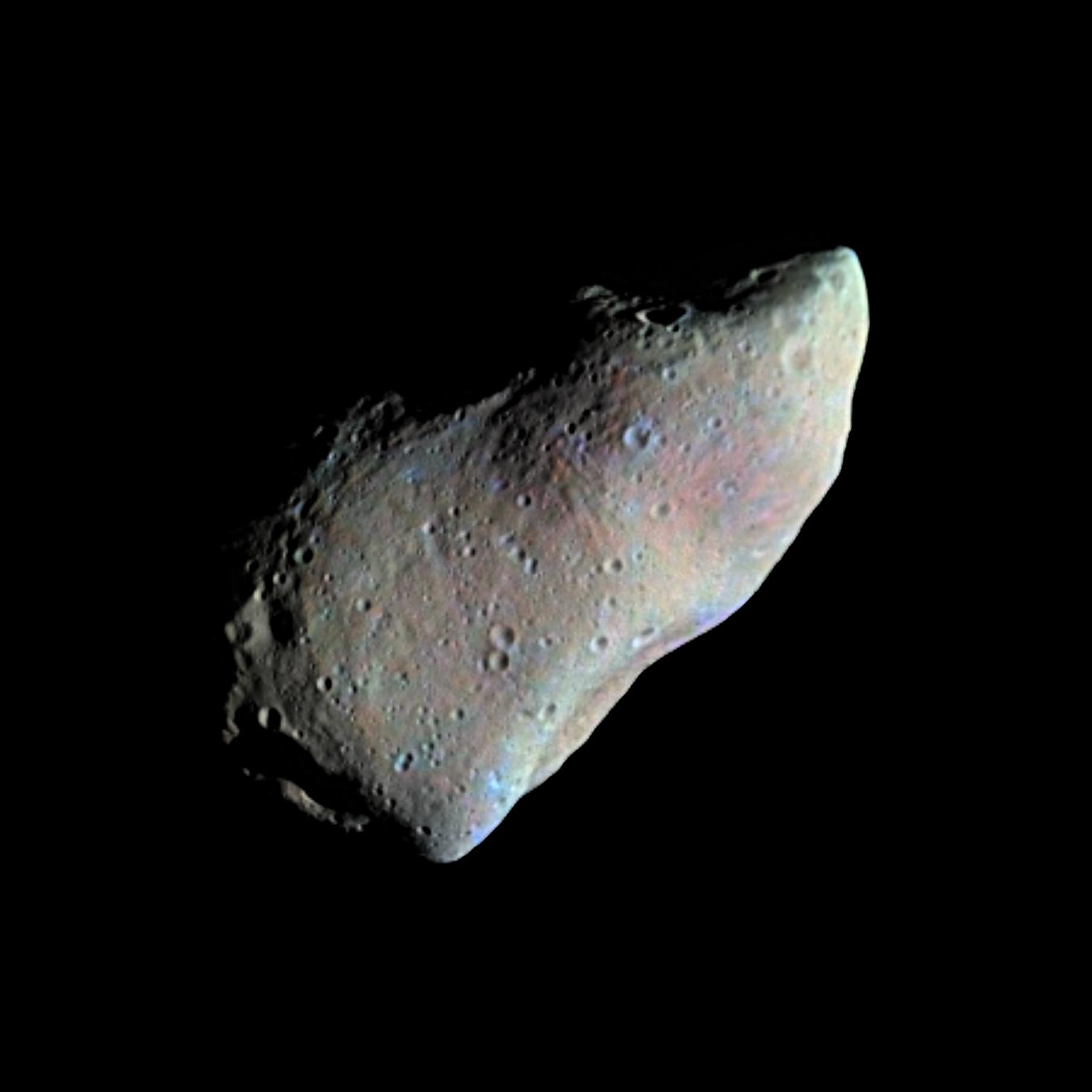
(951) Gaspra is a stony (S-type) asteroid about 18 km long in the inner main belt, and the first asteroid a spacecraft ever visited: NASA's Galileo flew 1,600 km from it on 29 October 1991, on its way to Jupiter.
Open in 3D viewSee (951) Gaspra in the live, interactive 3D map
Key facts
Radius
6.1 km
Distance from Sun
2.21 AU
Orbital period
3.29 years
Eccentricity
0.1737
Rotation
7.04 hours
Science
Physical
- Mean radius
- 6.1 km
- Rotation period
- 7.04 hours
Orbital
- Semi-major axis
- 2.21 AU
- From catalogued orbital elements (MPC)
- Eccentricity
- 0.1737
- From catalogued orbital elements (MPC)
- Inclination
- 4.10 °
- From catalogued orbital elements (MPC)
- Orbital period
- 3.29 years
- From catalogued orbital elements (MPC)
- Perihelion
- 1.83 AU
- Computed from the orbital elements
- Aphelion
- 2.59 AU
- Computed from the orbital elements
- Mean orbital velocity
- 20 km/s
- Computed from the orbital elements
Discovery
- Discovered
- July 30, 1916
- Discoverer
- Grigory Neujmin (Simeis, Crimea)
Composition
- Make-up
- Silicate rock, an S-type asteroid. Its surface is young — more than 600 small craters, and an age of about 20 to 300 million years from their count (Veverka et al. 1994) — and it is crossed by grooves 100–300 m wide, which suggest a single body broken from a larger one rather than a rubble pile (Thomas et al. 1994). Its mass has not been measured.
Radiation & temperature
- Insolation
- 0.205 S⊕ · 20% of the sunlight Earth receives
- Computed from the distance to the Sun (inverse-square; Earth's sunlight = 1), before any atmosphere.
- Geometric albedo
- 0.22
- Geometric albedo 0.22 ± 0.06; Bond albedo 0.12 ± 0.03 (Helfenstein et al. 1994).
- Equilibrium temperature
- 176 K (-97 °C)
- Computed from albedo + distance from the Sun (airless black body); uses the geometric albedo as an estimate
Discovery & history
- Discovered
- July 30, 1916
- By
- Grigory Neujmin (Simeis, Crimea)
- Name
- Named after Gaspra, the resort on the southern shore of Crimea where the writer Leo Tolstoy stayed.
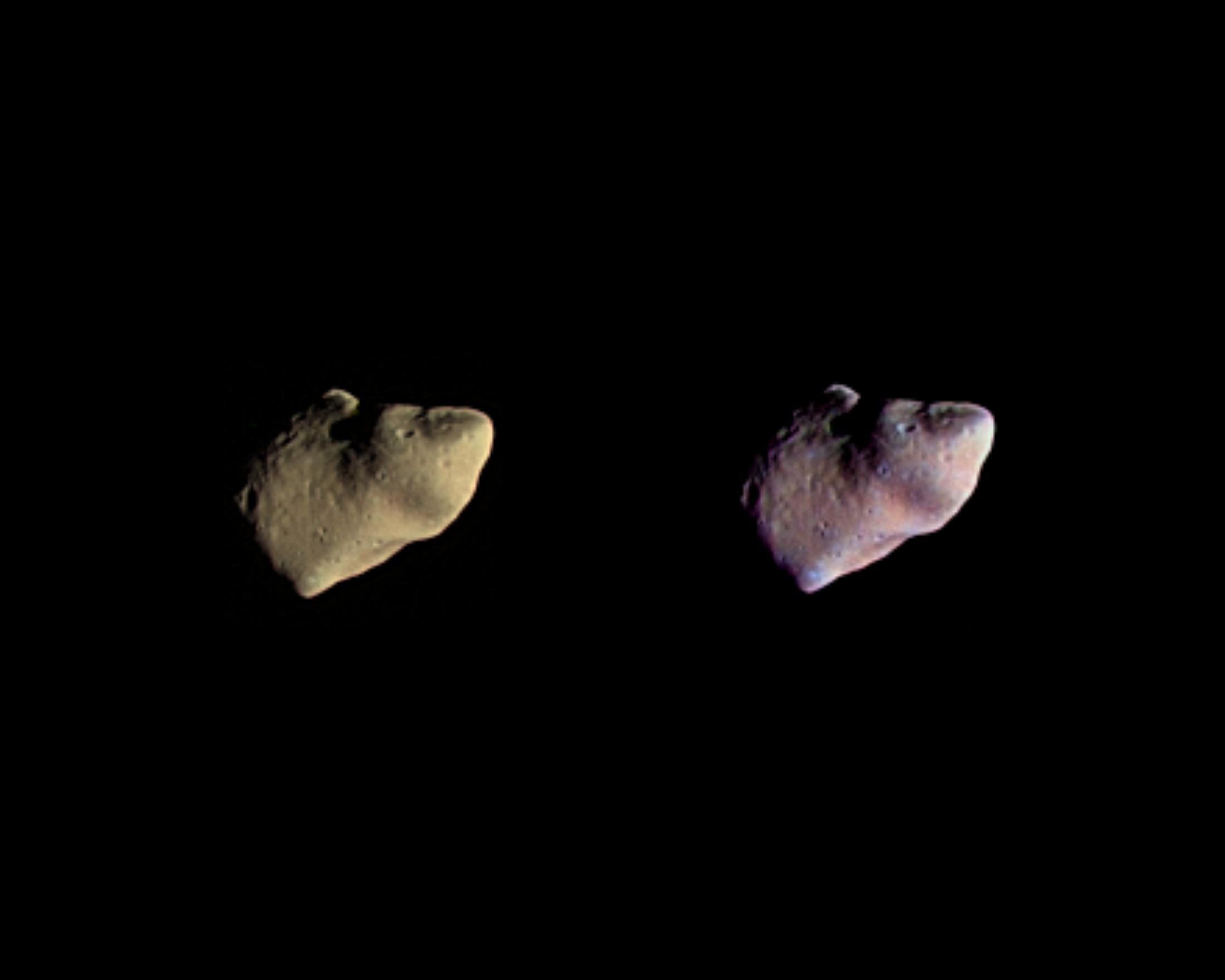
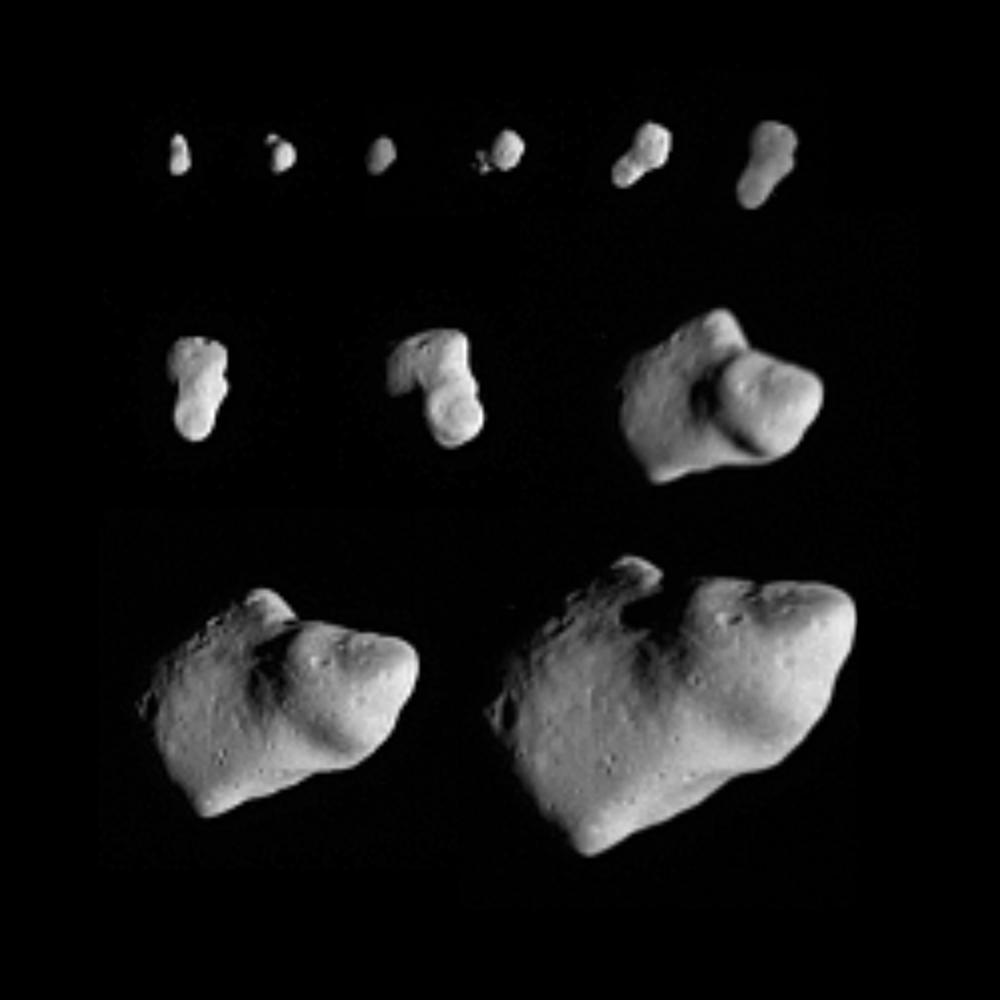
Grigory Neujmin found it at Simeis, in Crimea, on 30 July 1916. On 29 October 1991 Galileo passed it at about 8 km/s, 1,600 km away, and its 57 pictures — covering about 80% of the surface — were the first close-up images of an asteroid.
The first asteroid a spacecraft visited: 57 pictures from about 8 km/s, covering about 80% of its surface.
Images
Images from open archives · credit shown per image