
4 Vesta
Vesta is the second-most-massive asteroid and a differentiated protoplanet — with a basaltic crust, olivine mantle and iron core — studied up close by NASA's Dawn mission in 2011–2012. It is the source of the HED meteorites.
Key facts
Science
Physical
- Mean radius
- 263 km · 4% of Earth's radius
- Mass
- 2.59 × 10²⁰ kg · 0.00353 Moon masses
- Density
- 3,411 kg/m³ · 3.4× water
- Computed from mass and radius
- Rotation period
- 5.34 hours
Orbital
- Semi-major axis
- 2.36 AU
- From catalogued orbital elements (MPC)
- Eccentricity
- 0.0902
- From catalogued orbital elements (MPC)
- Inclination
- 7.14 °
- From catalogued orbital elements (MPC)
- Orbital period
- 3.63 years
- From catalogued orbital elements (MPC)
- Perihelion
- 2.15 AU
- Computed from the orbital elements
- Aphelion
- 2.57 AU
- Computed from the orbital elements
- Mean orbital velocity
- 19.4 km/s
- Computed from the orbital elements
Discovery
- Discovered
- March 29, 1807
- Discoverer
- Heinrich Wilhelm Olbers
Composition
- Make-up
- A differentiated body: a basaltic crust over an olivine-rich mantle and an iron–nickel core; the source of the HED meteorites found on Earth.
Radiation & temperature
- Insolation
- 0.179 S⊕ · 18% of the sunlight Earth receives
- Computed from the distance to the Sun (inverse-square; Earth's sunlight = 1), before any atmosphere.
- Bond albedo
- 0.18 · reflects 18% of incoming sunlight
- Equilibrium temperature
- 172 K (-101 °C)
- Computed from albedo + distance from the Sun (airless black body)
Discovery & history
- Discovered
- March 29, 1807
- By
- Heinrich Wilhelm Olbers
- Method
- Visual discovery (telescopic)
- Name
- The Roman goddess of the hearth — the name was chosen by mathematician Carl Friedrich Gauss.
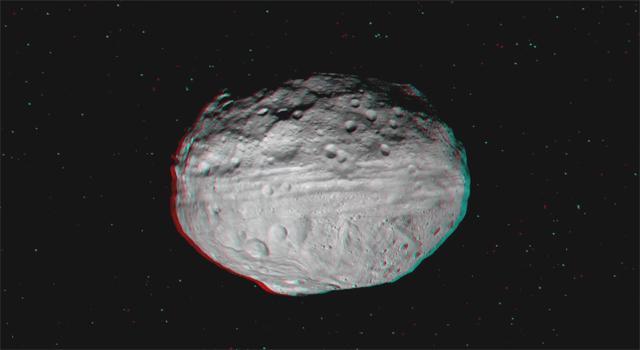
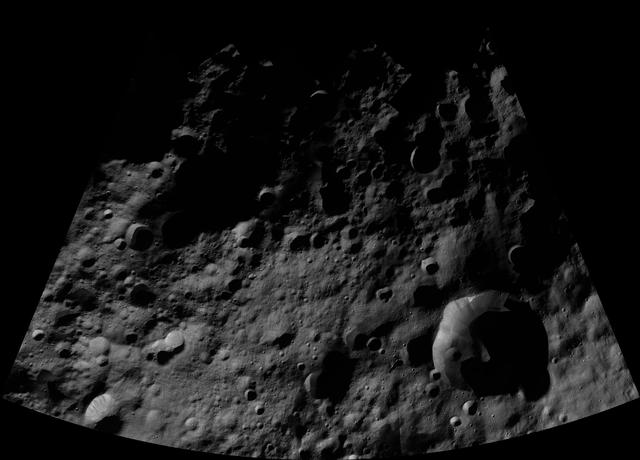
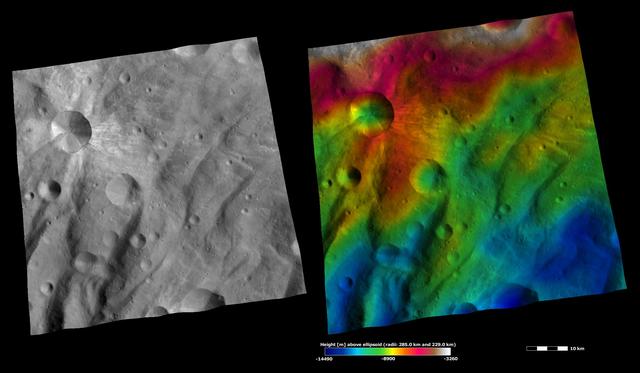
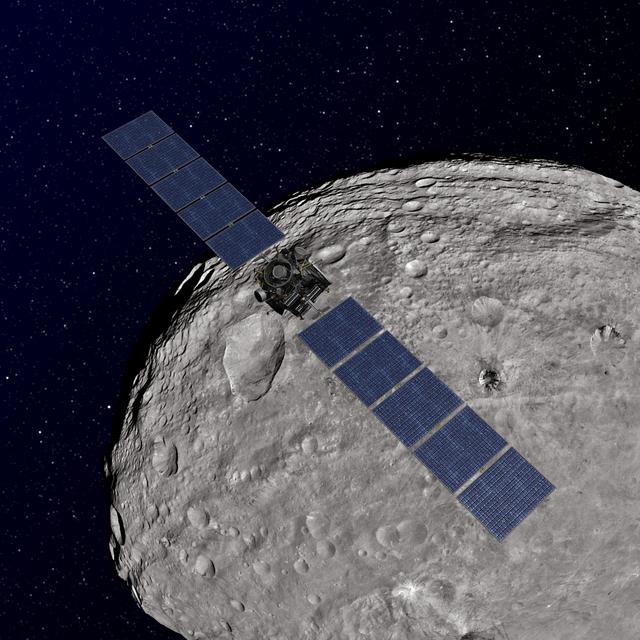
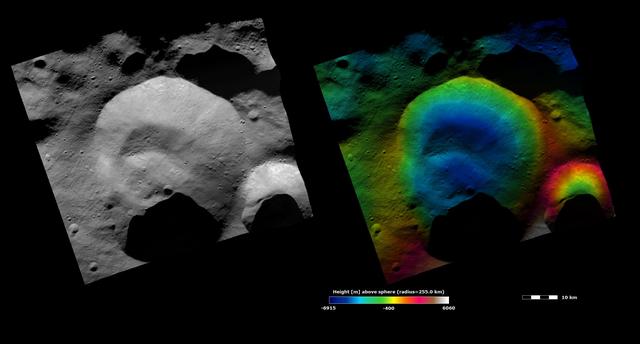
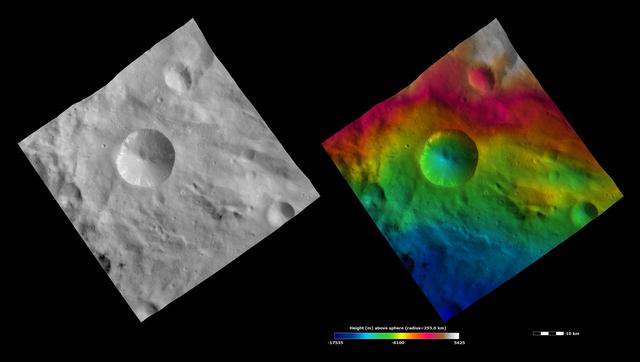
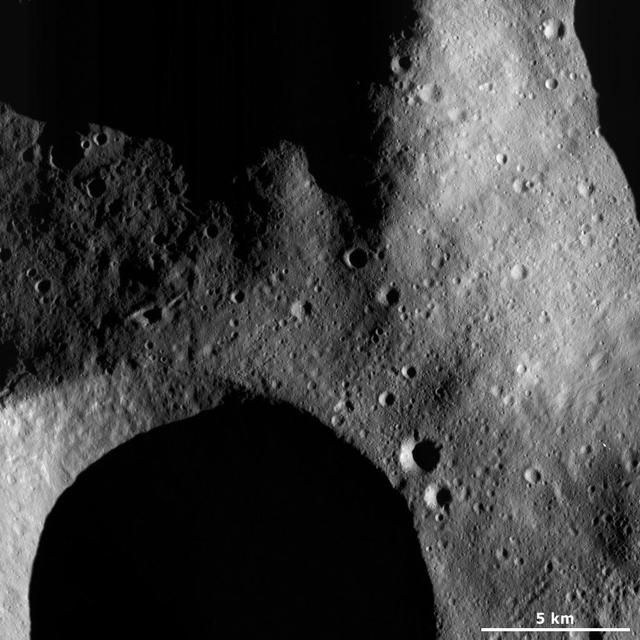
Vesta, the fourth asteroid found, is the brightest and the only one ever visible to the naked eye. Heinrich Olbers discovered it in 1807. Far from being a simple rock, Vesta turned out to be a differentiated 'protoplanet' with a basaltic crust, a mantle and an iron core — a survivor from the era of planet formation. The Dawn spacecraft orbited it in 2011–12, and meteorites blasted off Vesta long ago still fall to Earth today.
- 2011DawnOrbiter
Orbited Vesta for 14 months, mapping its giant southern impact basin.
Images

Images from open archives · credit shown per image